

 Français
 עברית
 Русский
Chores for 5 year olds: what they can do, and how to make it fun
Five is a great age to start: kids want to help, they love being trusted with a real job, and they're old enough to remember a short routine. The trick is keeping chores small, concrete and done with you at first.
What a 5-year-old can handle
Most 5-year-olds can follow two or three steps in a row, use both hands with growing control and stick with a task for a few minutes. They are not yet reliable on their own, and that's fine: at this age a chore is something you start together and they finish proudly.
The American Academy of Pediatrics lists chores for 5 to 7 year olds that include making their bed, setting and clearing the table, putting toys away, putting dirty clothes in a hamper, filling the pet's food dish, watering flowers and bringing in the mail. At 5, pick the simplest of those and expect to help.
Daily chores for a 5-year-old
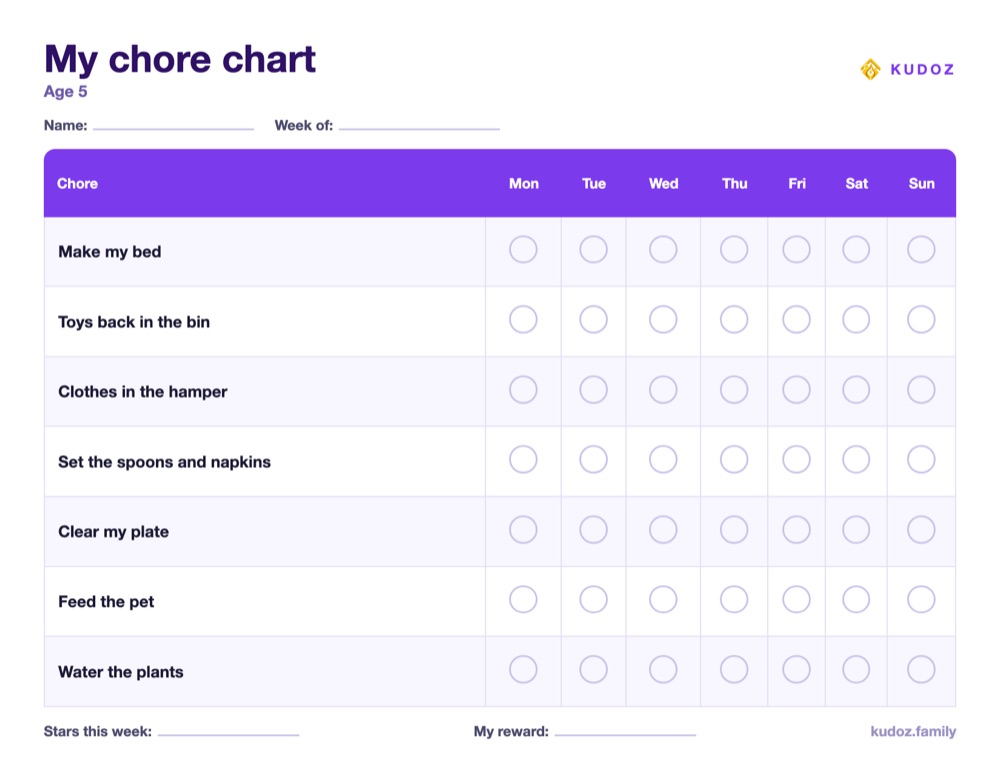
- Make their bed: pull the duvet up and put the pillow on top. That counts.
- Put toys back in bins or baskets, ideally with a picture label on each.
- Put dirty clothes in the hamper at bath time.
- Set the table: napkins and spoons, then forks once they know left from right.
- Clear their own plate and cup after meals.
- Feed the pet from a pre-measured scoop.
- Put shoes and coat away when coming home.
Weekly chores and helping jobs
- Water the plants with a small watering can
- Match clean socks from the laundry basket
- Dust low shelves with a sock on their hand
- Help put away groceries that go in low cupboards
- Wipe the table after dinner with a damp cloth
- Help sort recycling: paper here, plastic there
How to teach a chore to a 5-year-old
- Show it once, narrating each step: "First the pillow goes up here..."
- Do it together for a few days.
- Let them do it while you watch, and only help if they ask.
- Let them do it alone and check in afterward with a high five.
Many 5-year-olds can't read yet. Draw a small picture next to each chore on the chart (a bed, a toy box, a plate), or let them draw it. A child who can "read" their own chart doesn't need you to remind them.
Keep it a game
Five-year-olds respond to play far more than to rules. Race the timer ("can we tidy before the song ends?"), make the toy bin a basketball hoop, or let them be "the boss of the napkins" this week. Praise the effort and the specific action ("you put every book back on the shelf"), not just the result.
A sticker on the chart right after the chore matters more than a big reward at the end of the week. If you want ideas for that end-of-week reward, our reward chart guide lists 30 that aren't screens or sweets.
Common mistakes at this age
- Too many chores at once. Start with two, add one when those are automatic.
- Redoing their work in front of them. A lumpy bed is a made bed at 5.
- Chores only when you're in a hurry. Build them into routines that are calm: after breakfast, before bath.
Not sure your child is ready? Our chores by age list shows what comes before and after, and the chores for 6 year olds page is the natural next step.
Questions parents ask
How many chores should a 5-year-old have?
Two or three daily chores is plenty, plus one small weekly job like watering plants. Together they should take about 5 to 10 minutes a day.
Should I pay a 5-year-old for chores?
At five, money is still abstract. Stickers, a star chart or a small privilege, like picking the bedtime story, work better than coins.
Sources
- American Academy of Pediatrics, HealthyChildren.org, Chores and Responsibility (updated February 2024).
Turn the chart into a game.
KUDOZ is a family app that does all of this for you: quests, XP, coins and a reward shop your kids actually want to open. Available on iPhone, coming soon to Android.

This guide shares general parenting information. It is not medical advice and does not replace a diagnosis or a care plan from a qualified professional.