

 Français
 עברית
 Русский
Chore chart for kids: free printable templates, and how to make one work
A chore chart turns "help around the house" into something a child can see, check off and be proud of. Here are four free templates to print today, and the few rules that keep a chart working after the first week.
What makes a chore chart work
Most chore charts die after two or three weeks. Not because the idea is wrong, but because the chart asks too much or rewards too late. The charts that last share five things:
- Few chores. Two to five per child. You can add more once the first ones are automatic.
- Clear chores. "Clothes in the hamper", not "keep your room nice". A child should know exactly what done looks like.
- Chores that fit the age. Too easy is boring, too hard is discouraging. See our chores by age list.
- A same-day check. The box gets ticked, the sticker goes on, the point is counted on the day. Not on Sunday.
- Something at the end. A privilege, a family activity, points toward something they chose. Our reward chart guide has 30 ideas.
Free printable chore charts
All four templates are free, with no sign-up. Click an image to open the PDF, or download the PNG to edit it in any app. They are sized for US Letter and print fine on A4.
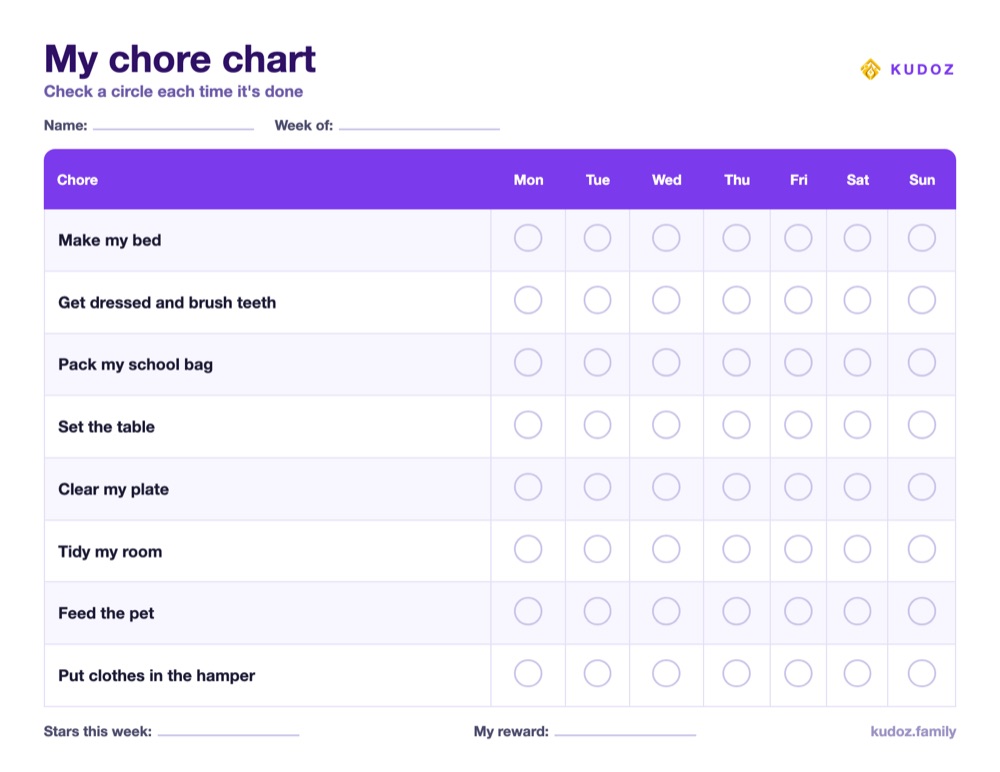
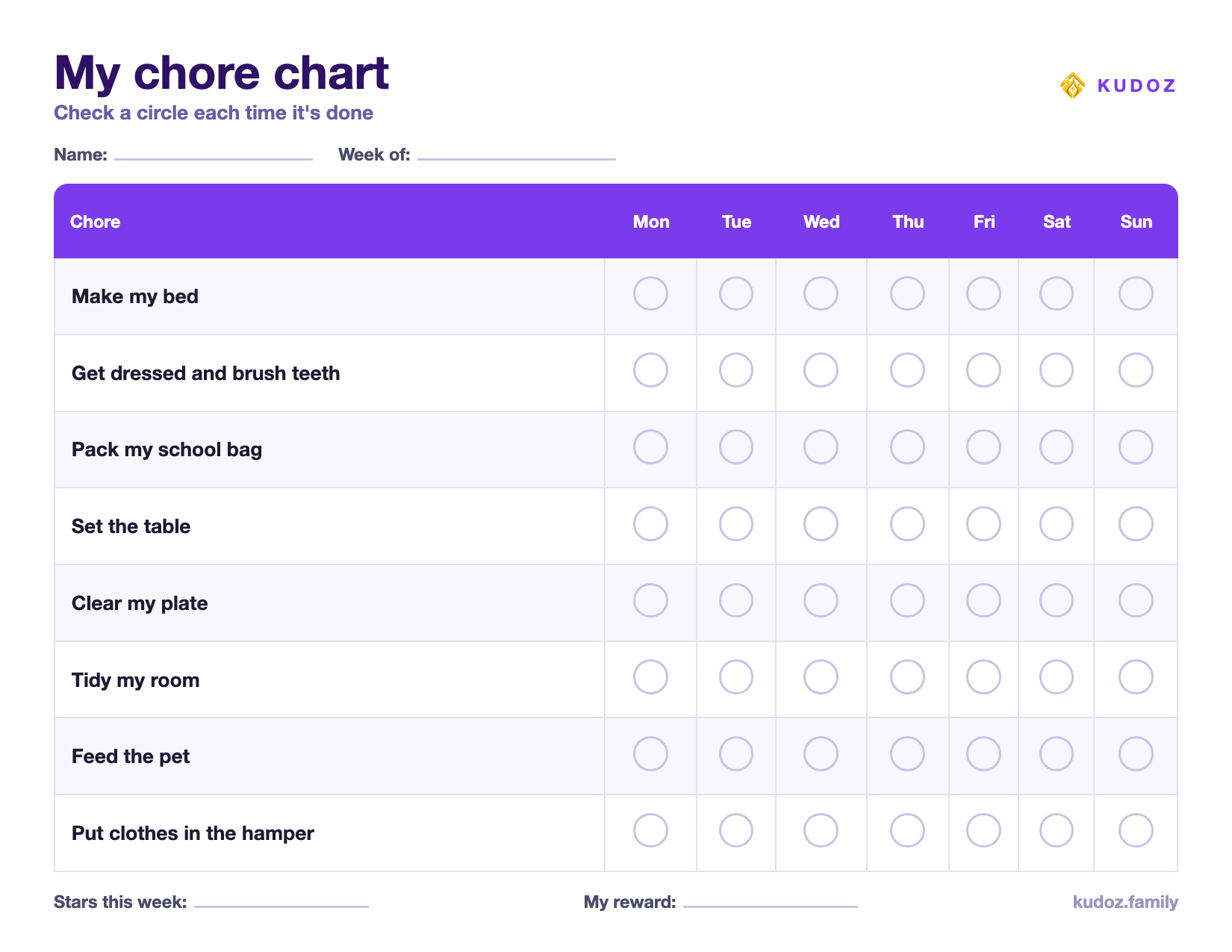
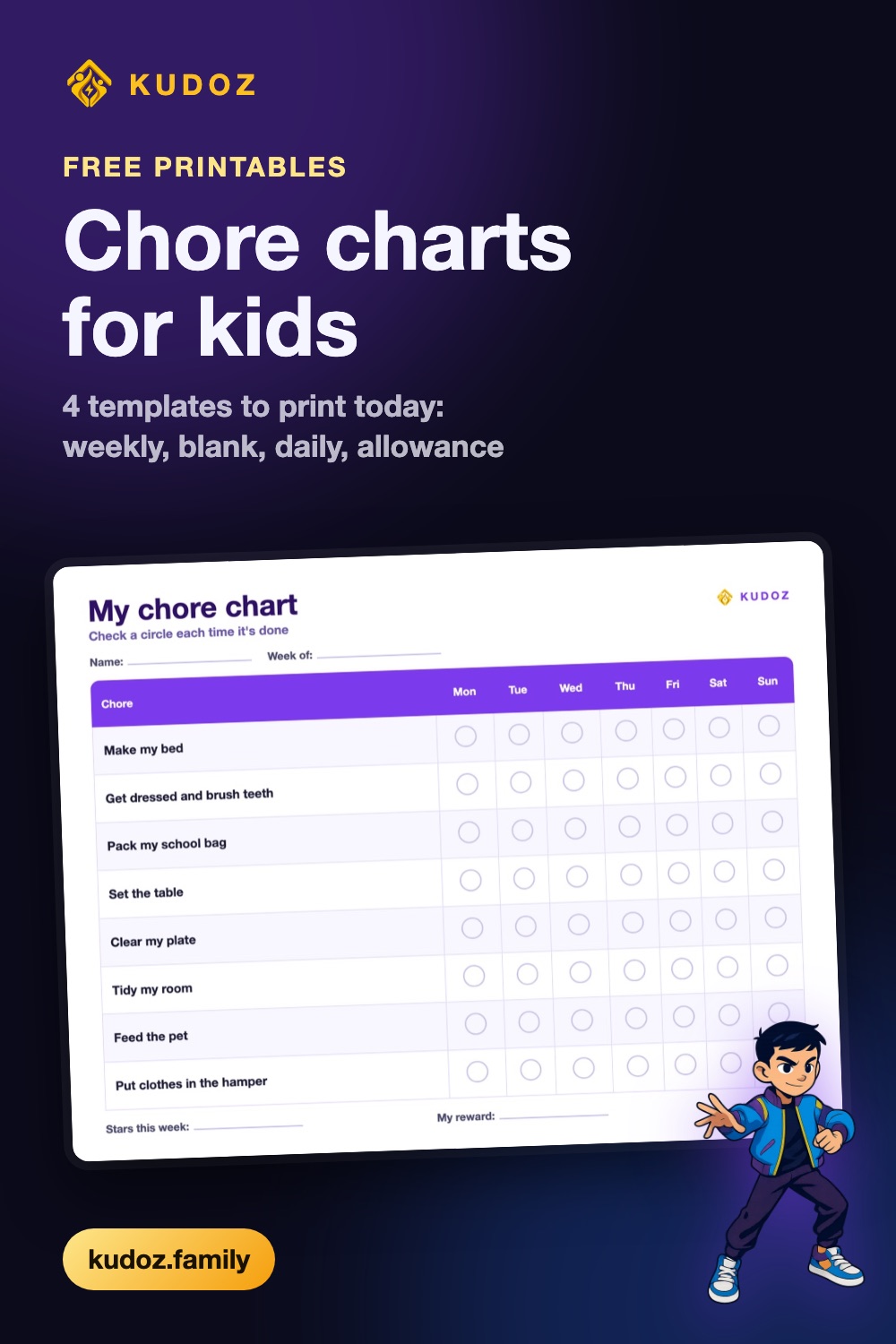
1. Weekly chore chart
Eight common chores for kids around 5 to 9, with a circle to color in each day. Cross out the ones that don't fit your family.
2. Blank chore chart template
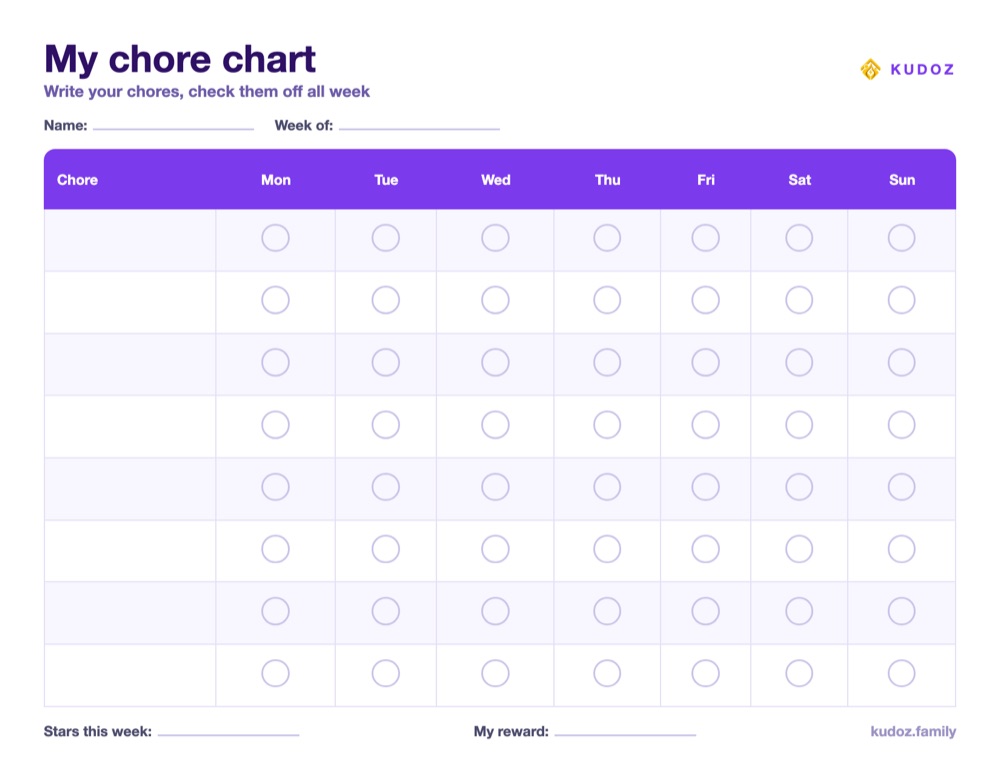
Write your own chores, or let your child write them. Kids follow a chart they filled in themselves much more willingly.
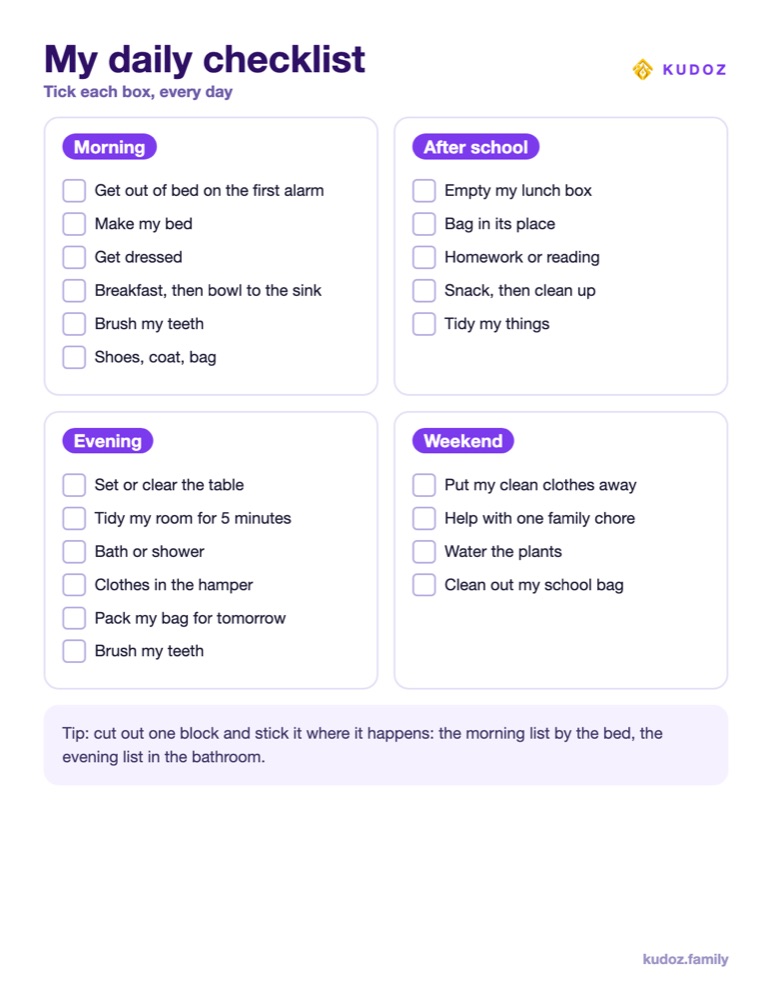
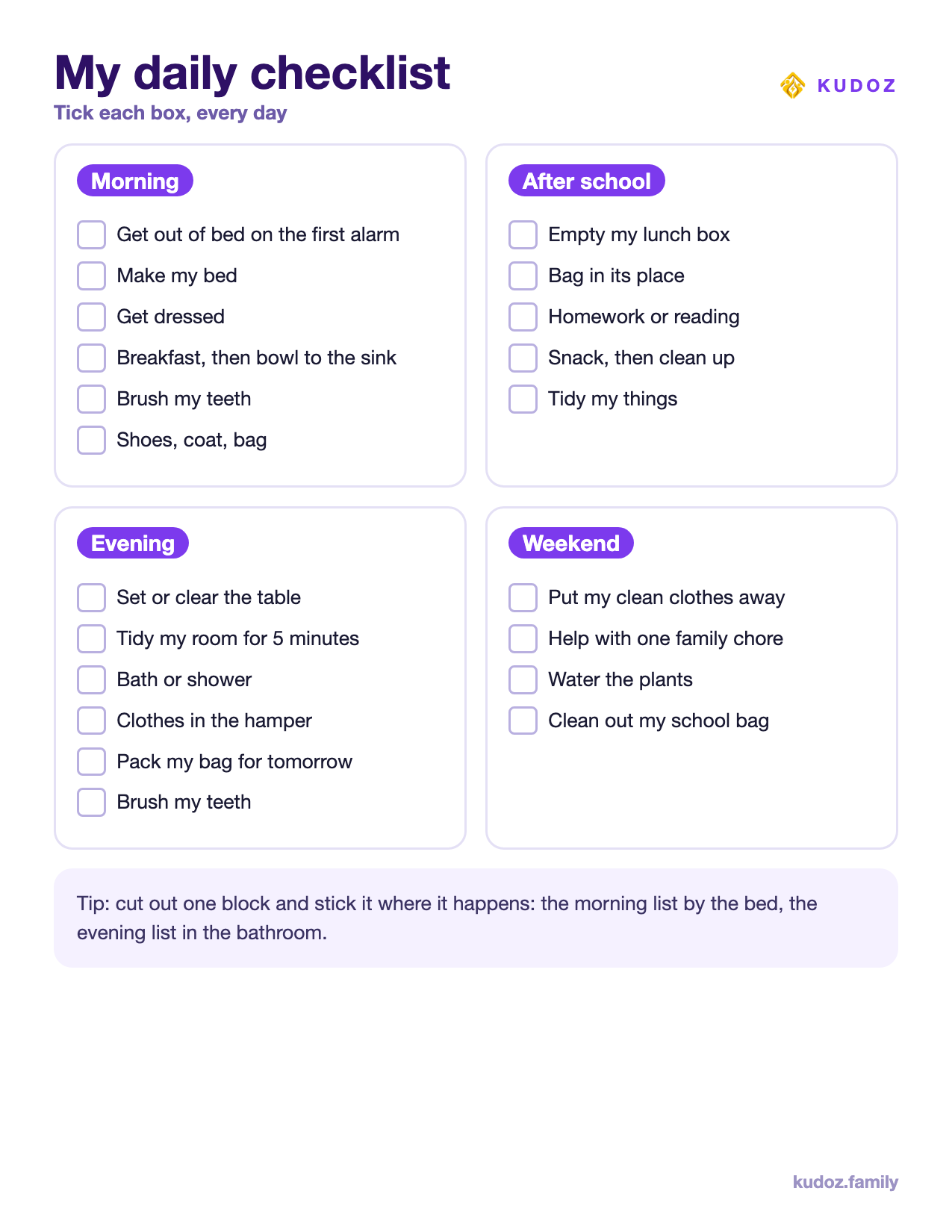
3. Daily chore checklist
Organized by moment of the day: morning, after school, evening and weekend. Great for kids who need structure, and for mornings that go off the rails.
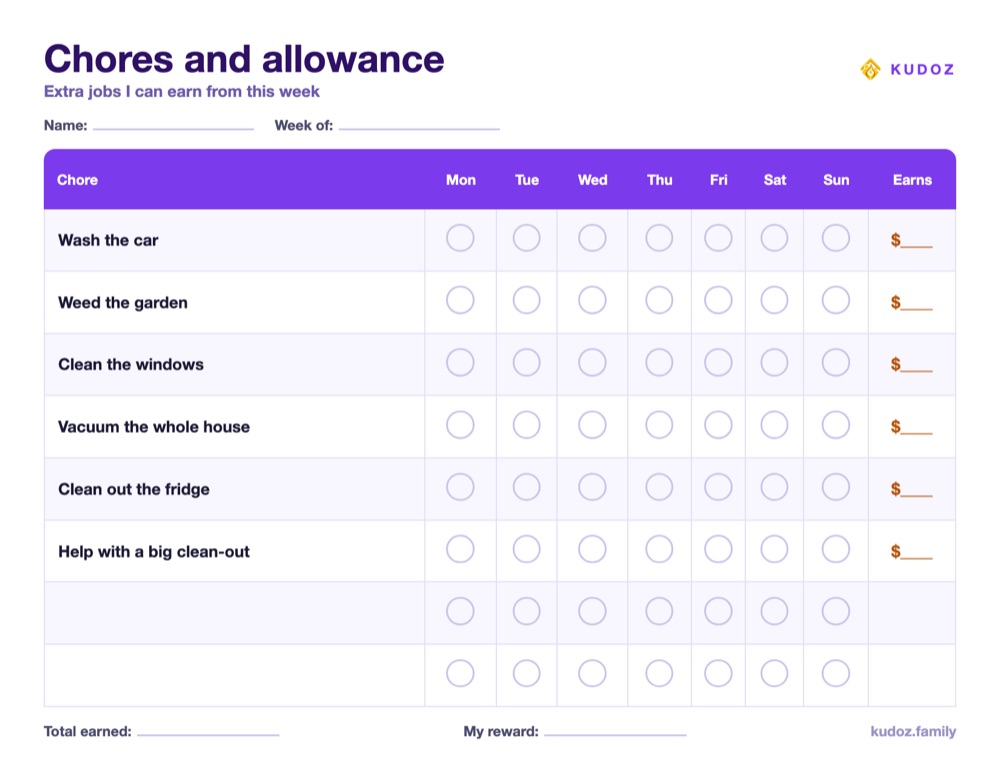
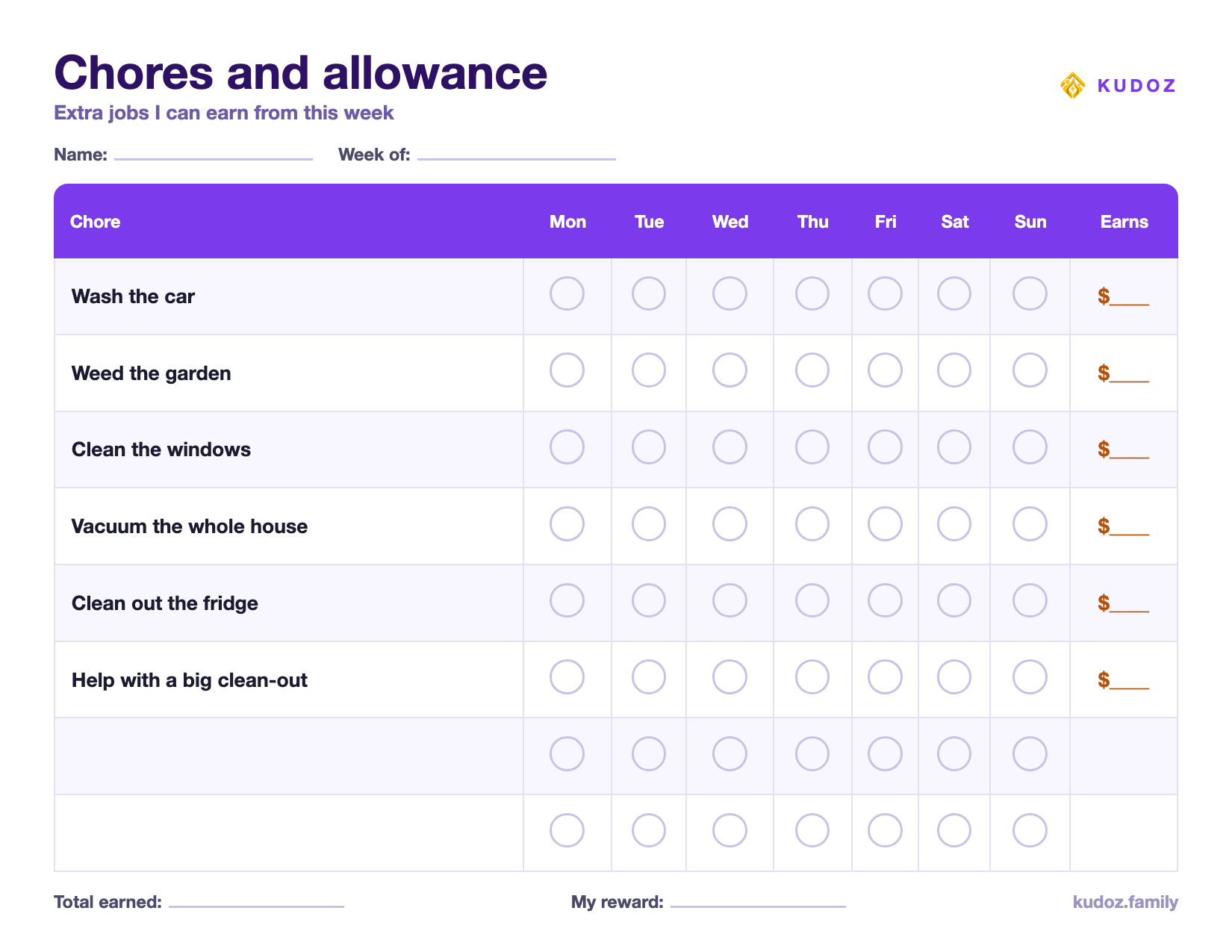
4. Allowance chore chart
For families who pay for extra jobs: list the jobs, write what each earns, and total it on Sunday. Keep everyday chores on a separate chart, unpaid.
How to set up a chore chart in 5 steps
- Pick the chores together. Suggest a list that fits their age and let your child choose some of them.
- Show each chore once. Do it in front of them, then together. Don't put a chore on the chart they haven't learned yet.
- Put the chart where the chores happen. The fridge works for kitchen chores; the bedroom door for morning ones.
- Agree on the reward. What happens after 5 checked days? Write it at the bottom of the chart.
- Review it every Sunday. Two minutes: what went well, what to change. Swap a chore that has become automatic for a new one.
Chore chart ideas by age
| Age | Chore ideas |
|---|---|
| 3 to 4 | Toys in the bin, clothes in the hamper, help feed the pet |
| 5 and 6 | Make the bed, set napkins and spoons, clear their plate, water plants |
| 7 and 8 | Pack their lunch, sweep, vacuum a room, make a snack, walk the dog |
| 9 and 10 | Load and unload the dishwasher, take out the trash, start the laundry |
| 11 and 12 | Clean the kitchen and bathroom, do their laundry, cook a simple meal |
| Teens | Grocery runs, yard work, a family meal a week, a zone of the house |
A family chore chart for several kids
With two or more children, fairness becomes the main issue. A few rules help:
- One chart per child, or one color per child on a shared chart.
- Equal effort, not equal chores. A 10-year-old does more than a 5-year-old, and both should know why.
- Rotate the chores nobody wants every week: trash, the litter box, cleaning the sink.
- No comparing. Each child is measured against their own chart, not against their siblings.
Chore chart with points or allowance
Many families combine two systems: everyday chores that everyone does without pay, and extra jobs that earn money or points. Points are easier with younger kids: each chore earns points, and points buy rewards from a menu you agree on together. Money makes sense once your child can count it and wants to save for something.
Paper chart or app?
Paper is perfect to start, especially before 7. It gets harder with several kids, recurring chores and rewards to keep track of. That's when an app helps: chores repeat on their own, points are counted for you, and kids see their progress. We compared both in our chore chart app guide. KUDOZ is our take on it: chores become quests, kids earn XP and Kudoz coins, and you approve with a tap.
Questions parents ask
What should be on a kid's chore chart?
Two to five chores your child can actually do alone, each written as a clear action ("put toys in the bin", not "be tidy"), with a box for each day.
How do you make a chore chart that works?
Keep it short, put it where the chores happen, check boxes the same day, and link it to a reward or privilege your child cares about.
What is the best age to start a chore chart?
Around 3 or 4 with pictures, and from 5 or 6 with words. Our chores by age list shows what fits each age.
Turn the chart into a game.
KUDOZ is a family app that does all of this for you: quests, XP, coins and a reward shop your kids actually want to open. Available on iPhone, coming soon to Android.

This guide shares general parenting information. It is not medical advice and does not replace a diagnosis or a care plan from a qualified professional.