

 Français
 עברית
 Русский
Responsibility chart for kids: free printable templates, and how to hand over the job
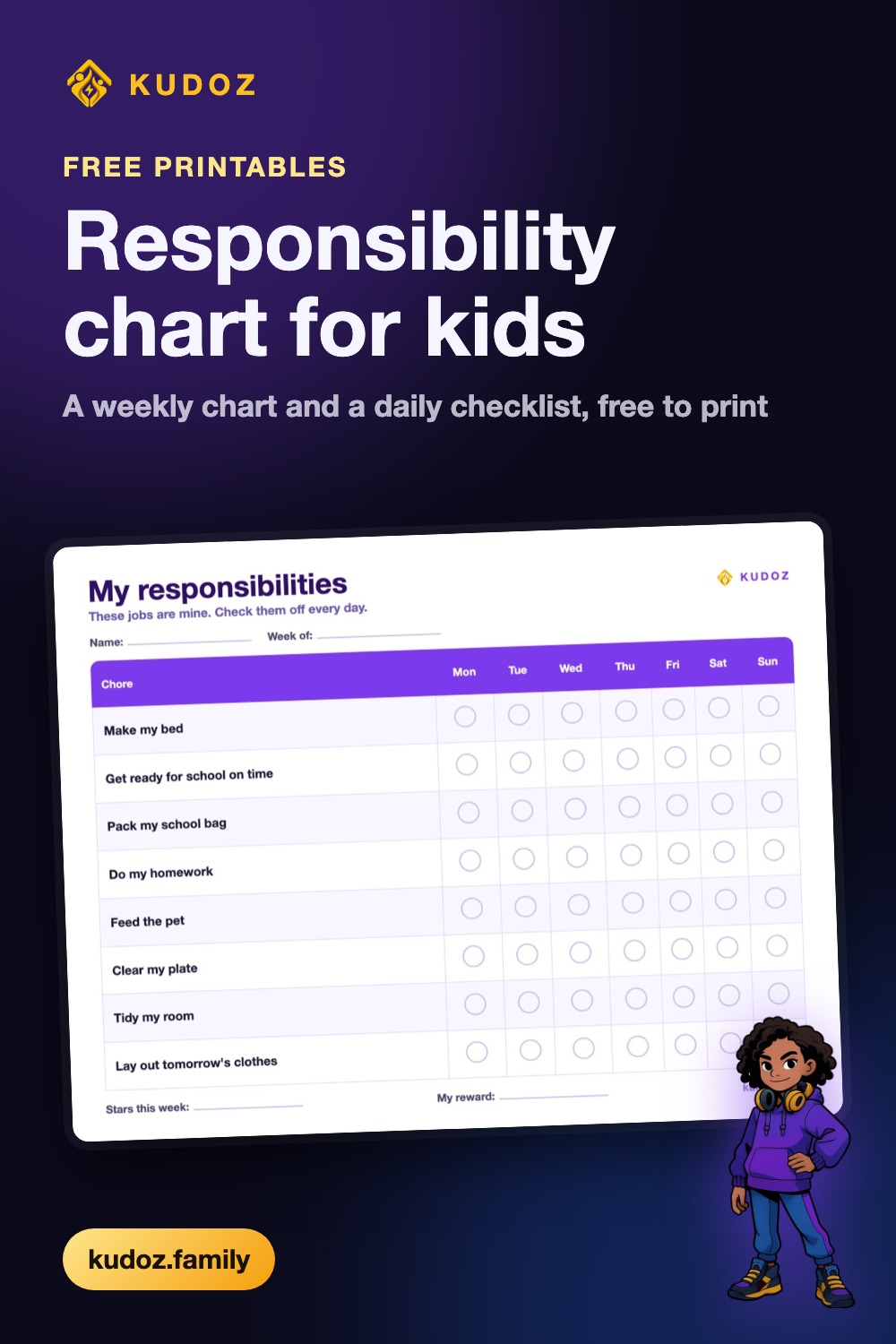
A chore chart lists tasks. A responsibility chart goes one step further: it says which jobs belong to your child, for real, without reminders. Here are two free templates and a plan to move from "helping" to "owning".

Chore chart or responsibility chart?
The difference is ownership. On a chore chart, you assign tasks and check them. On a responsibility chart, the jobs belong to your child. Nobody reminds them; the chart does. It's the step between "helping out" and "this is my job".
That's why a responsibility chart works best from about 6 or 7, once your child can do a task from start to finish. Before that, a chore chart or a behavior chart is a better fit.
Free printable responsibility chart templates
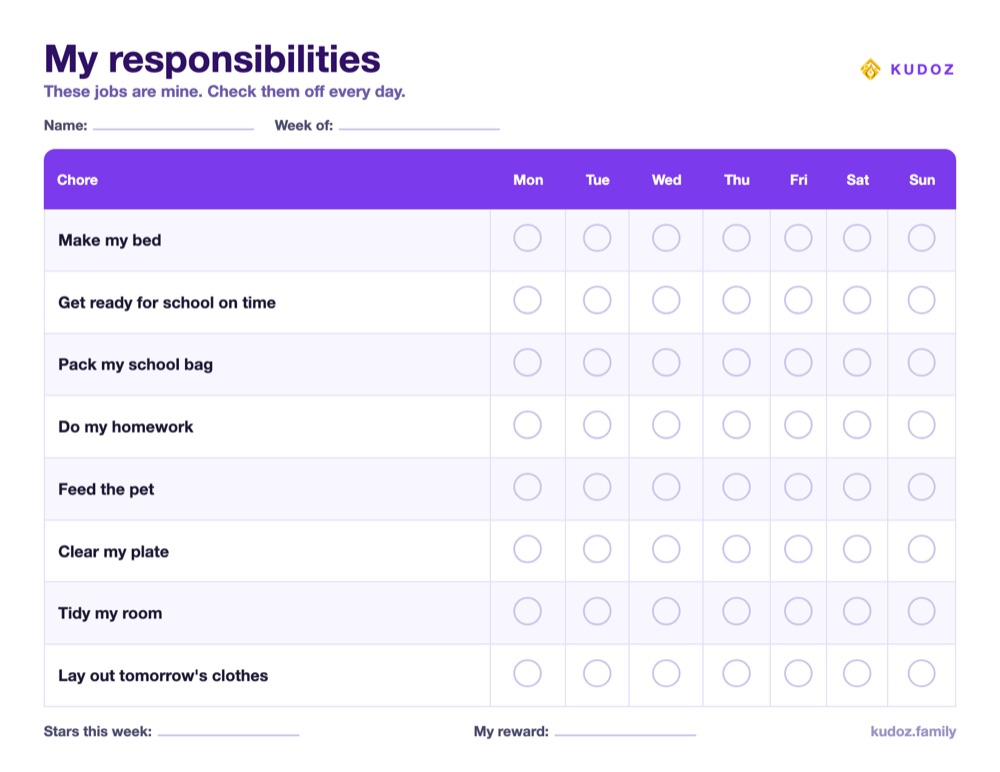
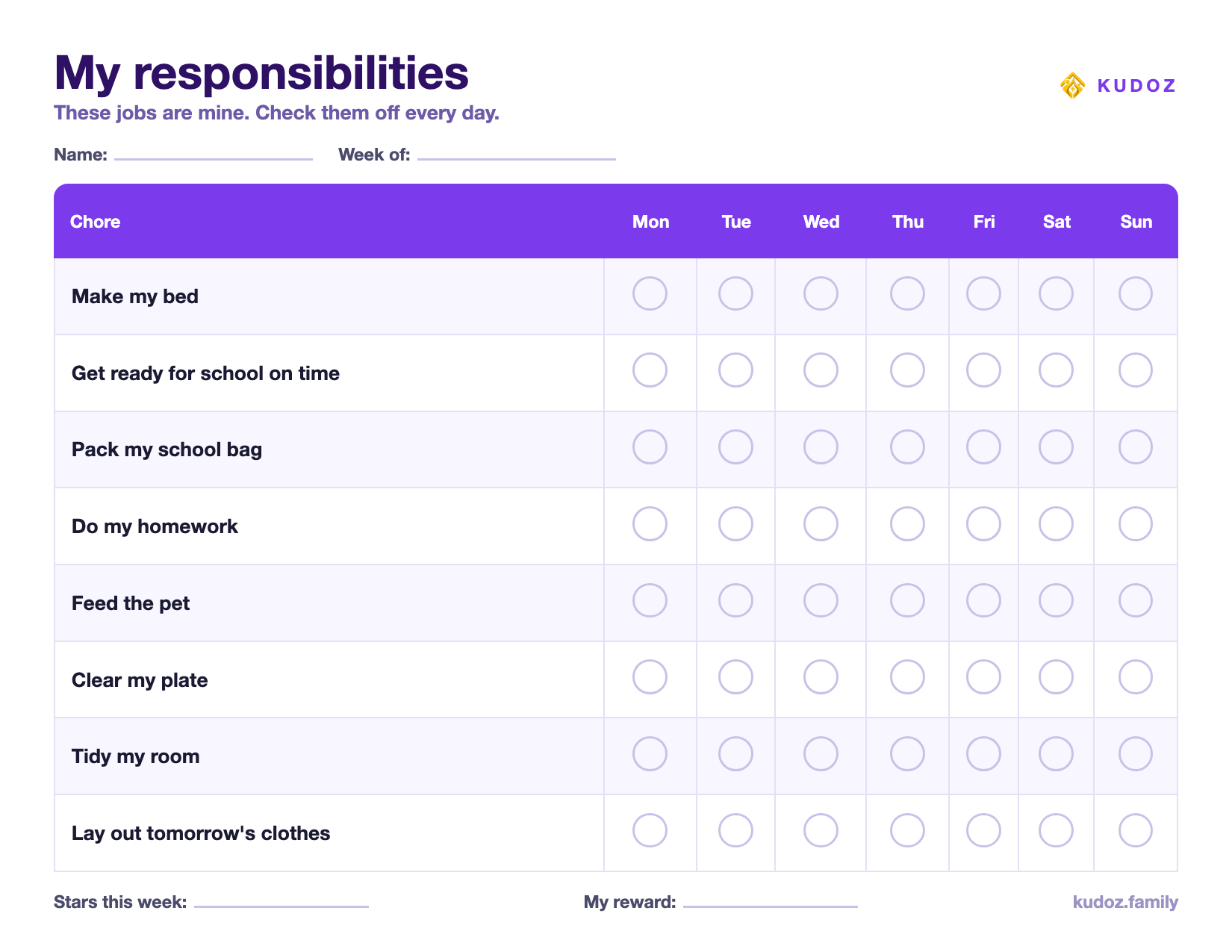
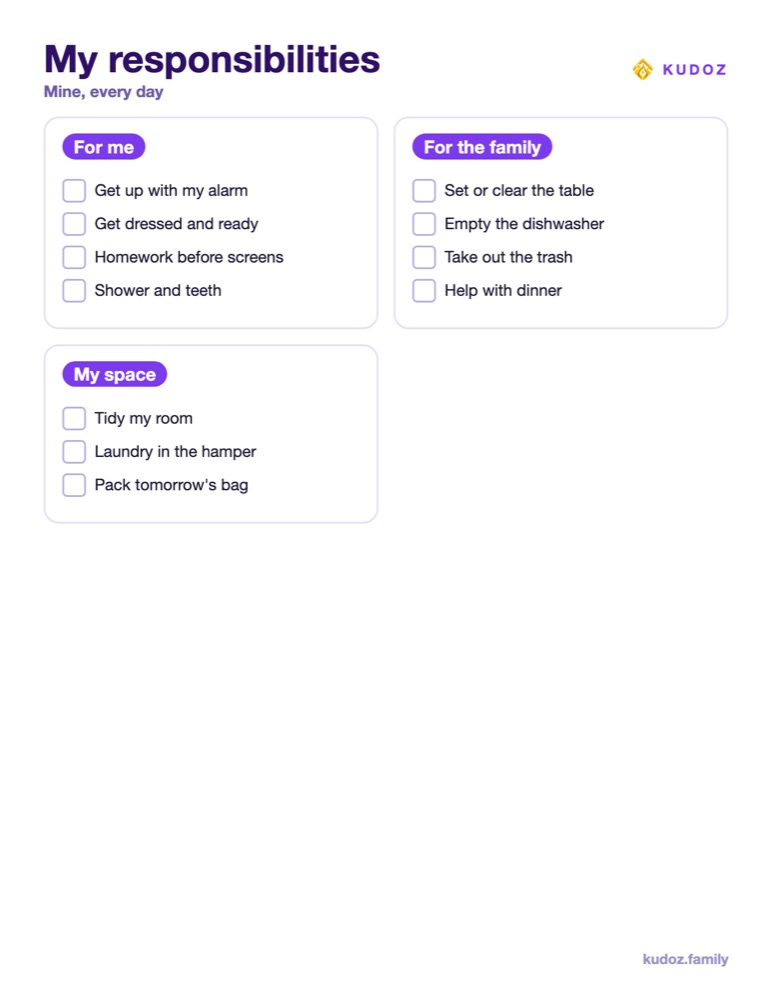
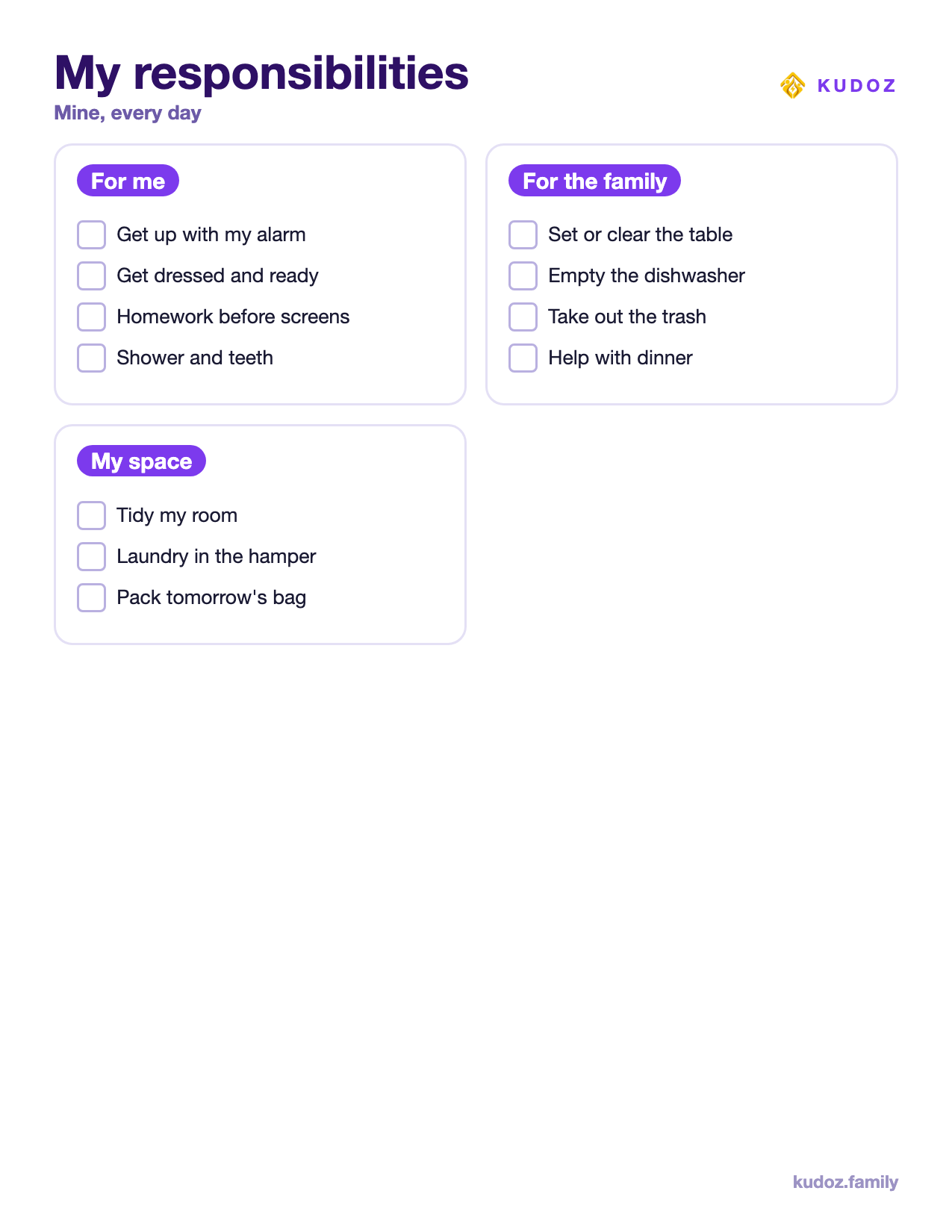
Two templates: a weekly chart with eight daily jobs, and a daily checklist grouped into three kinds of responsibilities.
Responsibilities by age
The American Academy of Pediatrics gives these benchmarks for school-age children:
| Age | Responsibilities that fit |
|---|---|
| 5 to 7 | Make the bed, set and clear the table, pack the school lunch, sort laundry, water plants |
| 8 to 10 | All of the above, plus vacuuming, helping cook dinner, making their own snacks, walking the dog |
| 11 to 12 | Clean the kitchen and bathroom, do laundry, cook a simple meal with supervision |
| 13 and up | Their own laundry, a weekly family job, part of the grocery list, looking after a younger sibling |
Our chores by age guide goes year by year, and the chore chart for teens covers the teenage years.
How to hand over a responsibility for good
- Do it together first. Show the job once or twice, then let your child do it while you watch.
- Define "done". "Room tidy" means floor clear, clothes in the hamper, bed made. Write it down if needed.
- Add one new responsibility at a time. The AAP recommends introducing one new task at a time so the list doesn't overwhelm your child.
- Step back. Stop reminding. The chart reminds. If the job isn't done, the natural consequence follows: screens wait until homework is done.
- Praise the effort, not the result. The AAP advice is to praise effort and initiative, and avoid badgering or scolding.
- Review it in a family meeting every week or two: what works, what's too easy, what's next.
Personal, family and "my space"
Grouping responsibilities helps kids understand why they matter:
- For me: getting up, getting ready, homework. These are about taking care of yourself.
- For the family: the table, the dishwasher, the trash. Everyone who lives here helps.
- My space: my room, my bag, my laundry. My things, my job.
Responsibilities, rewards and allowance
There's no single right answer, but a common approach works well: everyday responsibilities are part of family life and aren't paid; extra jobs (washing the car, a big clean-up) can earn money or points. If you give pocket money, keep it regular and predictable. A points system or an app makes the link visible for younger kids. Our reward chart guide has ideas for rewards that aren't money or screens.
Paper or app?
A printed chart is a great start. With several kids, recurring jobs and points to count, an app saves you the bookkeeping. In KUDOZ, each responsibility becomes a mission that repeats every day or on the days you choose; your child marks it done, you approve, and they earn XP and Kudoz for rewards you set. See our chore chart app guide to compare.
Questions parents ask
What is a responsibility chart?
A chart of the jobs that belong to your child, every day or every week, that they do without being asked. Unlike a chore list, the point is ownership: the job is theirs.
At what age should a child have responsibilities?
Small ones from 3 (putting shoes away), real daily jobs from 5 to 7. The American Academy of Pediatrics lists making the bed, setting the table and packing lunch as fitting ages 5 to 7.
Should responsibilities be paid?
Most families keep everyday responsibilities unpaid (we all live here) and pay or reward extra jobs. If you give an allowance, keep it predictable and separate from the basics.
What if my child refuses?
Stay calm and consistent. The AAP suggests natural consequences, such as a privilege that waits until the job is done, rather than nagging or scolding.
Sources
- American Academy of Pediatrics, HealthyChildren.org, Age-Appropriate Chores for Children, adapted from Caring for Your School-Age Child: Ages 5 to 12 (updated February 9, 2024).
Turn the chart into a game.
KUDOZ is a family app that does all of this for you: missions, XP, coins and a reward shop your kids actually want to open. Available on iPhone and Android.


This guide shares general parenting information. It is not medical advice and does not replace a diagnosis or a care plan from a qualified professional.