

 Français
 עברית
 Русский
Behavior chart for kids: free printable charts, and how to make one work
A behavior chart works when it shows a child exactly what to do, rewards it quickly, and keeps the focus on what goes well. Here are two free charts to print today, and the rules that keep a chart working after the first week.
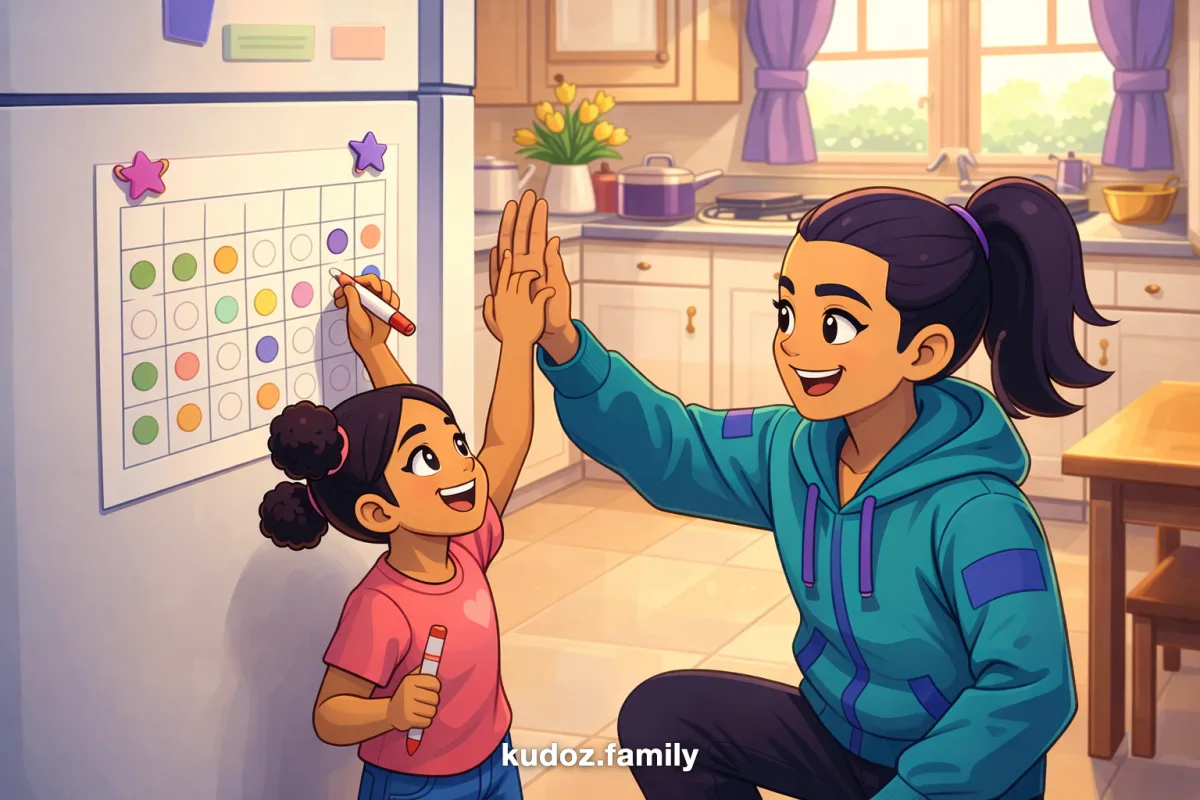
What a behavior chart is, and why it works
A behavior chart is a simple grid: a few behaviors you want to see more often, and a box for each day. Each time your child does one, they color a circle or add a sticker. When they reach the goal you agreed on, they earn a reward.
It works because of positive reinforcement: a behavior that is noticed and rewarded tends to come back. The chart makes that visible. Your child sees their progress, you remember to notice the good moments, and the conversation shifts from "stop that" to "look what you did".
The CDC's parenting guidance sums up the core of it: give the reward right after the behavior, because a quick reward is the most effective way to change a young child's behavior.
Free printable behavior charts
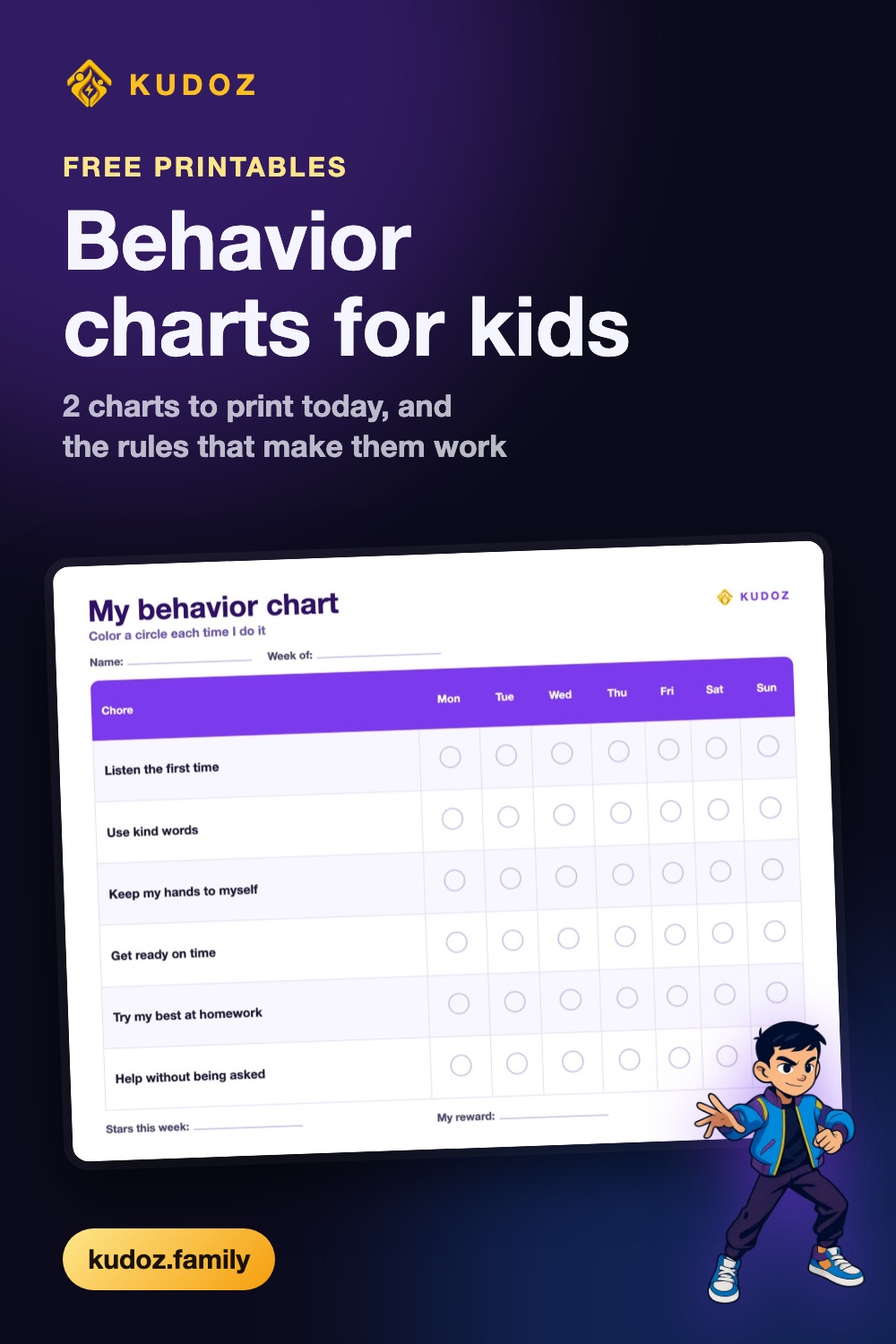
Two charts to print today. The first has six common behaviors already written. The second is blank, for your own goals.
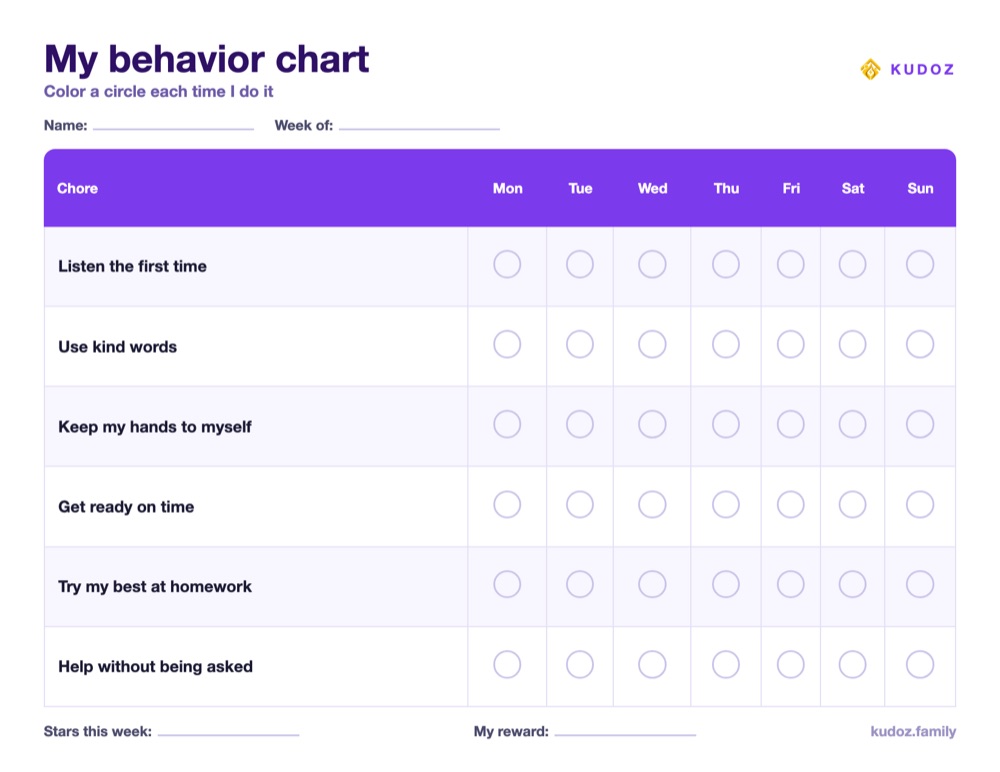
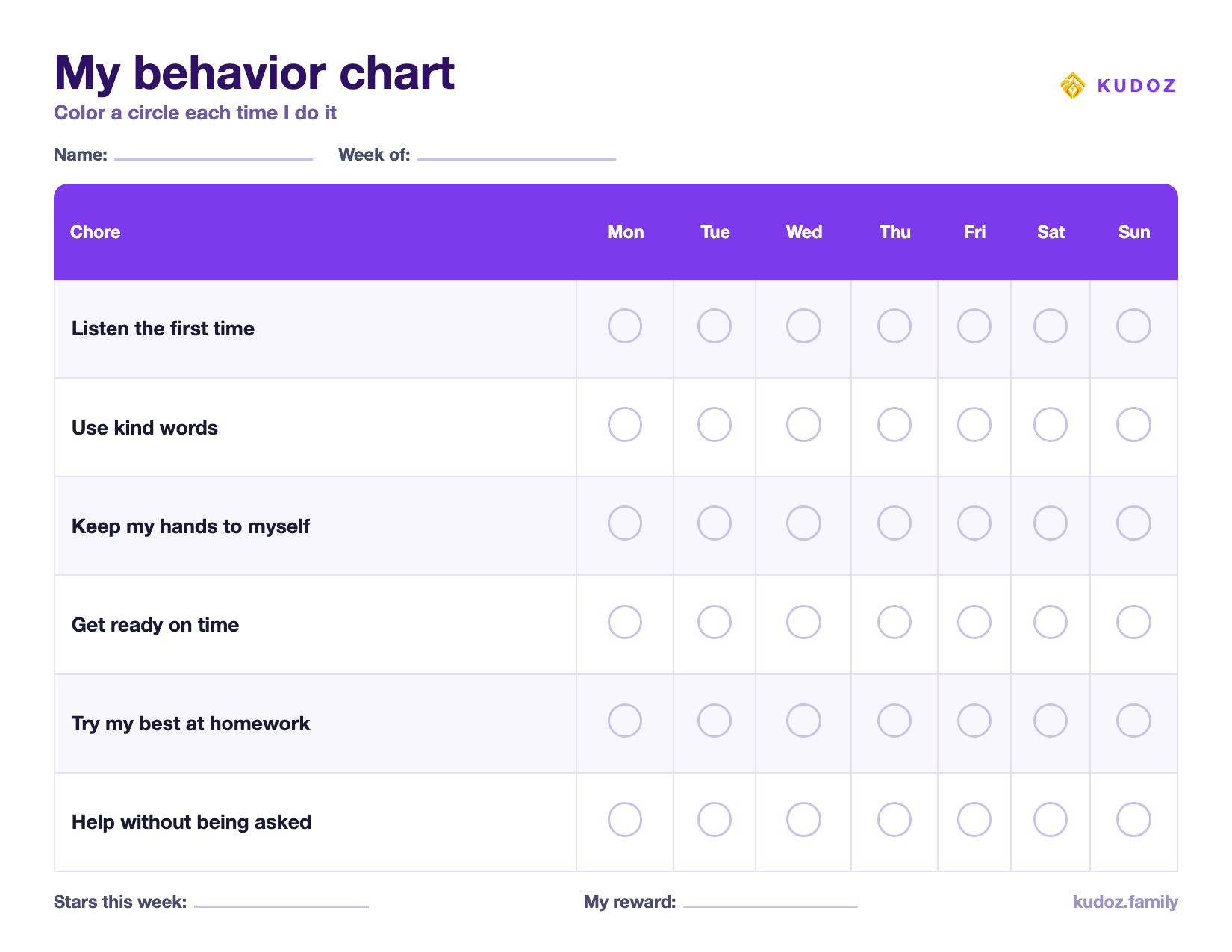
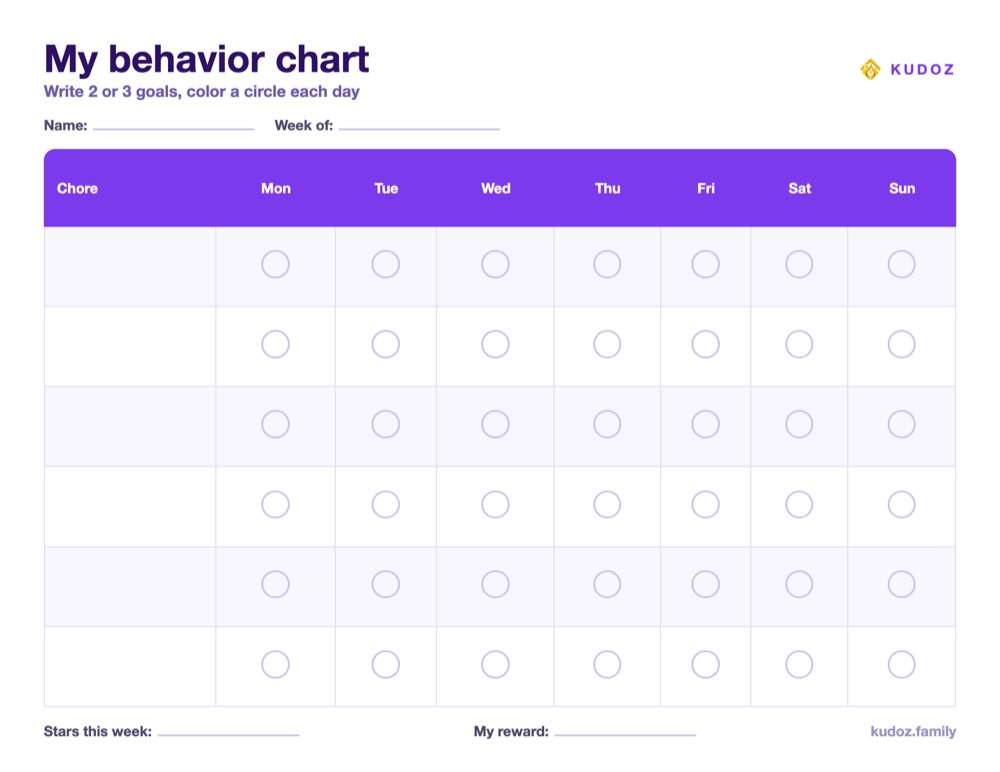
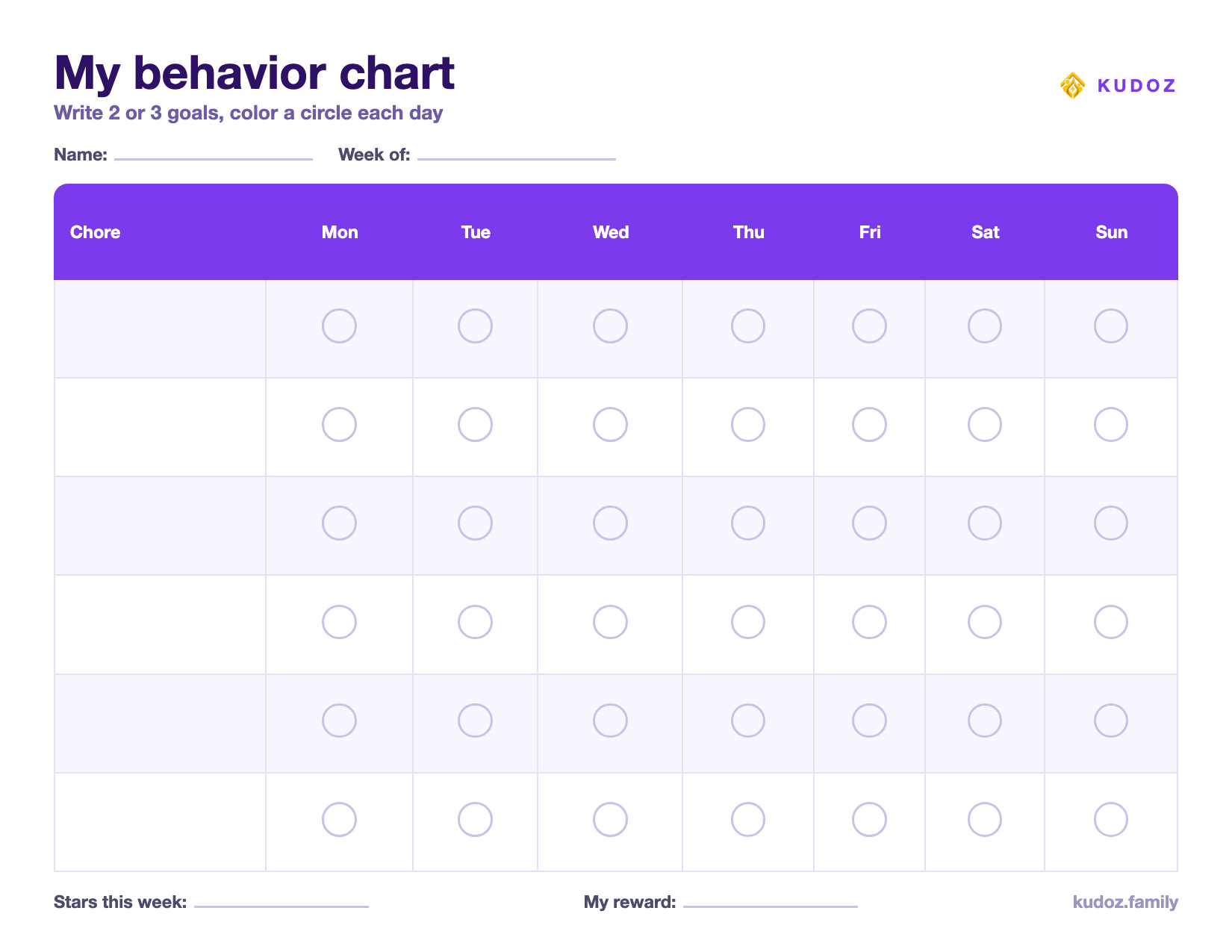
Print on regular paper, or slide it into a plastic sleeve and use a dry-erase marker to reuse it every week.
How to set up a behavior chart that works
- Pick one to three behaviors. Start with the one that causes the most friction at home. Three goals is the maximum a child can keep in mind.
- Write what to do, not what to avoid. "Keep my hands to myself", not "No hitting". "Get dressed before breakfast", not "Stop dawdling". The CDC recommends stating exactly what you want to see your child do.
- Make it concrete and doable. "Be good" can't be checked. "Put my shoes on when I'm asked" can.
- Add pictures for younger kids. A toothbrush next to "Brush teeth", a backpack next to "Pack my bag". Kids who can't read yet still know where they stand.
- Agree on the reward together. Five circles might earn choosing dinner; twenty might earn a trip to the park. Small and frequent beats big and far away.
- Put it where everyone sees it: the fridge, the bedroom door, next to the shoes.
- Check it at the same time every day, for example at dinner. A chart that isn't updated stops meaning anything within a few days.
Examples of behaviors to put on the chart
| Situation | Behavior to write |
|---|---|
| Mornings | Get dressed before breakfast; shoes and coat on when asked |
| Listening | Listen the first time; answer when I'm called |
| Siblings | Use kind words; keep my hands to myself; take turns |
| Homework | Start homework after snack; ask for help instead of giving up |
| Bedtime | In pajamas by 7:30; stay in my bed after lights out |
| Screens | Turn off the tablet when the timer rings |
| At the table | Stay seated until I'm done; clear my plate |
Rewards that keep kids motivated
Rewards don't have to cost money. The CDC points out that social rewards (hugs, high fives, specific praise, extra time together) are cheap or free and can be even more powerful than toys. A few ideas, from small to big:
- Right away: a high five, a special handshake, "I saw you put your shoes on the first time I asked!"
- Daily: choosing the bedtime story, 10 extra minutes of play, picking the music in the car.
- Weekly: choosing dinner, a movie night, baking together, a later bedtime on Saturday.
- Bigger goals: a trip to the park or the pool, inviting a friend over, a small toy they've been saving for.
Praise works best when it's specific. "Great job" tells your child little. "You used kind words with your sister even when she took your Lego" tells them exactly what to repeat.
Common mistakes
- Taking stars away. The chart becomes a punishment and your child gives up. The CDC is clear: never take away a reward that's been earned. Handle misbehavior separately.
- Too many goals at once. Ten behaviors means ten things to argue about. Start small.
- A reward that's too far away. For a 5-year-old, a reward in two weeks might as well be never. Shorten the path.
- Moving the goal. If you agreed on five circles, five circles it is, even on a hard day.
- Using it forever. Once a behavior is a habit, celebrate it, retire it and pick a new goal.
When the chart stops working
Most charts work well for two or three weeks, then fade. Before giving up, check three things, as the CDC suggests: is the expectation too high for your child's age, is the behavior clear enough, and does the reward still interest them? Adjust one of the three and explain the change to your child.
If you have several kids, give each their own chart and never compare them. Each child is measured against their own goals.
If the same behavior keeps coming back with big emotions, a feelings chart helps your child name what is going on, and clear family rules make the expectations the same every day.
Sticker chart, behavior chart, reward chart
The words overlap. A sticker chart is a behavior chart where kids add a sticker instead of coloring, which younger children love. A reward chart focuses on counting toward a prize. For chores rather than behavior, use a chore chart, and as kids grow, a responsibility chart hands them more ownership. For children aged 3 to 5, see our preschool behavior chart, and for feedback several times a day, the daily behavior chart.
Paper chart or app?
Paper is perfect to start. It gets harder with several kids, goals that change every few weeks, and rewards to keep track of. An app does the counting for you and shows kids their progress like a game. In KUDOZ, each goal becomes a mission: your child taps "I'm done", you approve, and they earn XP and Kudoz to spend in a family shop you stock yourself. We compared both options in our chore chart app guide.
If your child has ADHD, short goals and fast rewards matter even more: see our ADHD chore chart guide.
Questions parents ask
What age is a behavior chart for?
Most kids respond to a behavior chart from about 3 to 10. Before 3, a single goal with immediate praise works better. After 10, kids usually prefer a contract or points they can track themselves.
How many behaviors should be on a chart?
Start with one to three. More than that and your child can't keep them in mind, and you can't check them consistently.
Should I take stars away for bad behavior?
No. Keep the chart for what goes well. The CDC is explicit: never take away a reward your child has already earned. Handle misbehavior separately, with a calm consequence.
How long should we use a behavior chart?
Until the behavior is a habit, often 3 to 6 weeks. Then retire that goal, keep praising it, and move to a new one.
Behavior chart or reward chart: what's the difference?
A behavior chart tracks how your child behaves (listening, kind words). A reward chart counts stars toward a prize. Most families combine both: behaviors earn stars, stars earn a reward.
Sources
- CDC, Essentials for Parenting Toddlers and Preschoolers, Tips for Using Praise and Rewards (updated April 30, 2026).
- CDC, Behavior therapy for young children with ADHD, on parent training in behavior management.
Turn the chart into a game.
KUDOZ is a family app that does all of this for you: missions, XP, coins and a reward shop your kids actually want to open. Available on iPhone and Android.


This guide shares general parenting information. It is not medical advice and does not replace a diagnosis or a care plan from a qualified professional.