

 Français
 עברית
 Русский
Preschool behavior chart: a free printable for ages 3 to 5
At 3, 4 and 5, children want to do well but can't hold a goal in mind for long. A preschool behavior chart helps when it's short, visual and generous with rewards. Here's a free chart built for that age, and how to use it.
What's different at 3 to 5
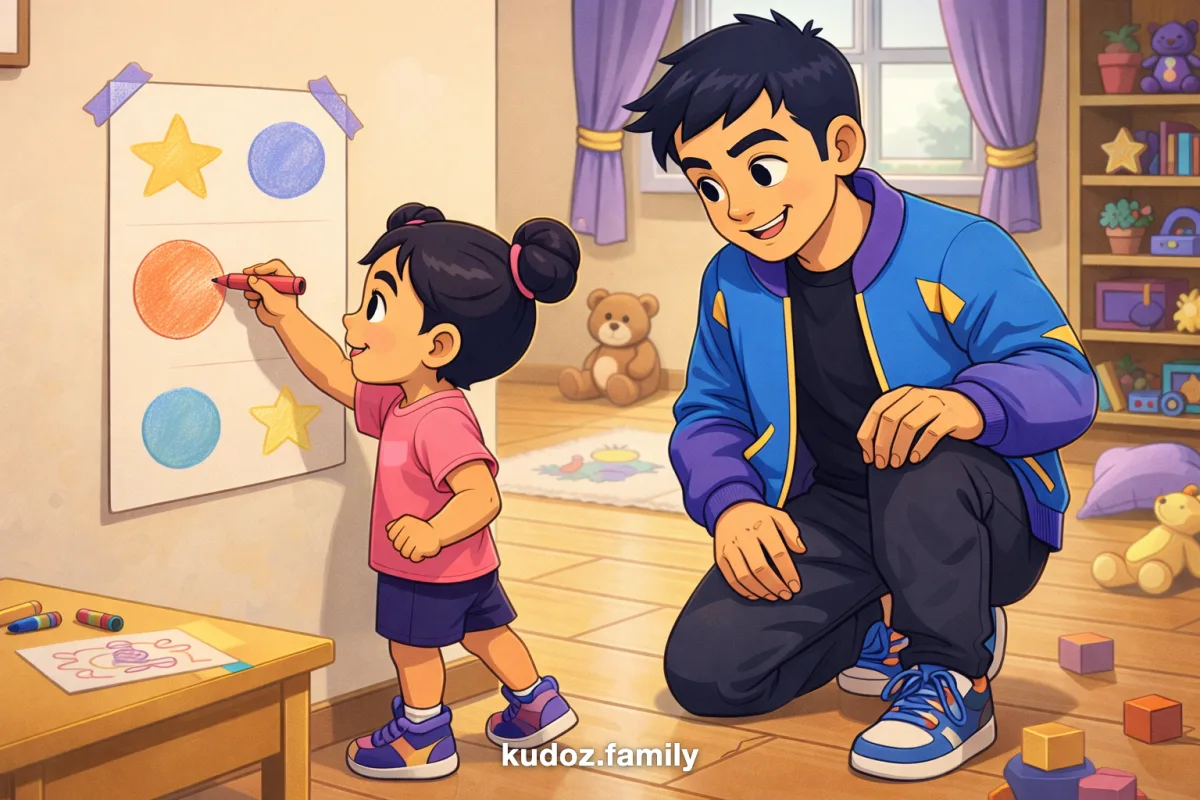
Preschoolers and kindergartners learn fast, but they live in the moment. Three things matter more at this age than later:
- Speed. The reward needs to come right after the behavior. The CDC notes that a quick reward is the most effective way to change a young child's behavior.
- Pictures. Most kids can't read yet. A drawing of a toothbrush next to "I brush my teeth" lets them read their own chart.
- Very few goals. One goal at 3, two at 4, three or four at 5.
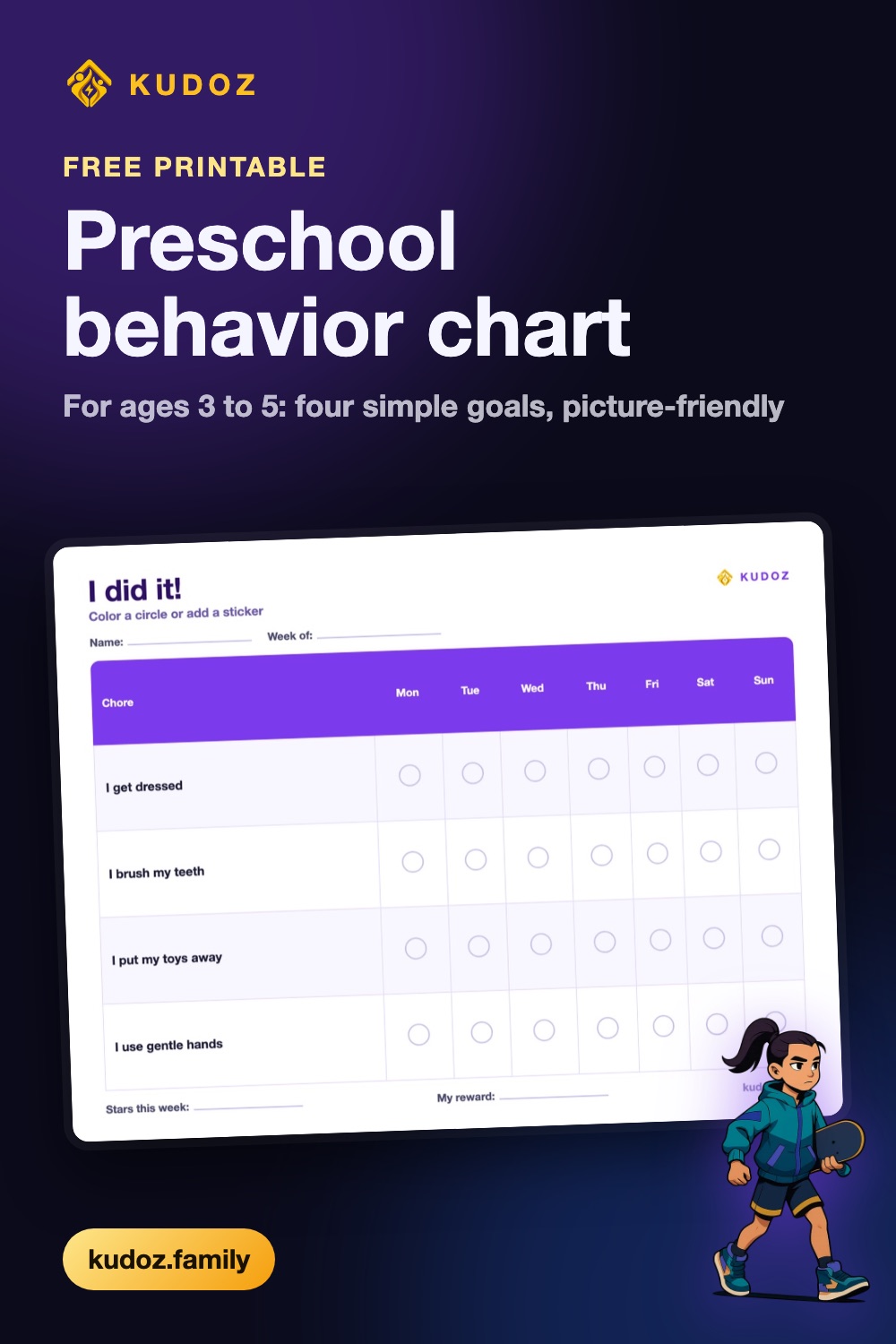
Free printable preschool behavior chart
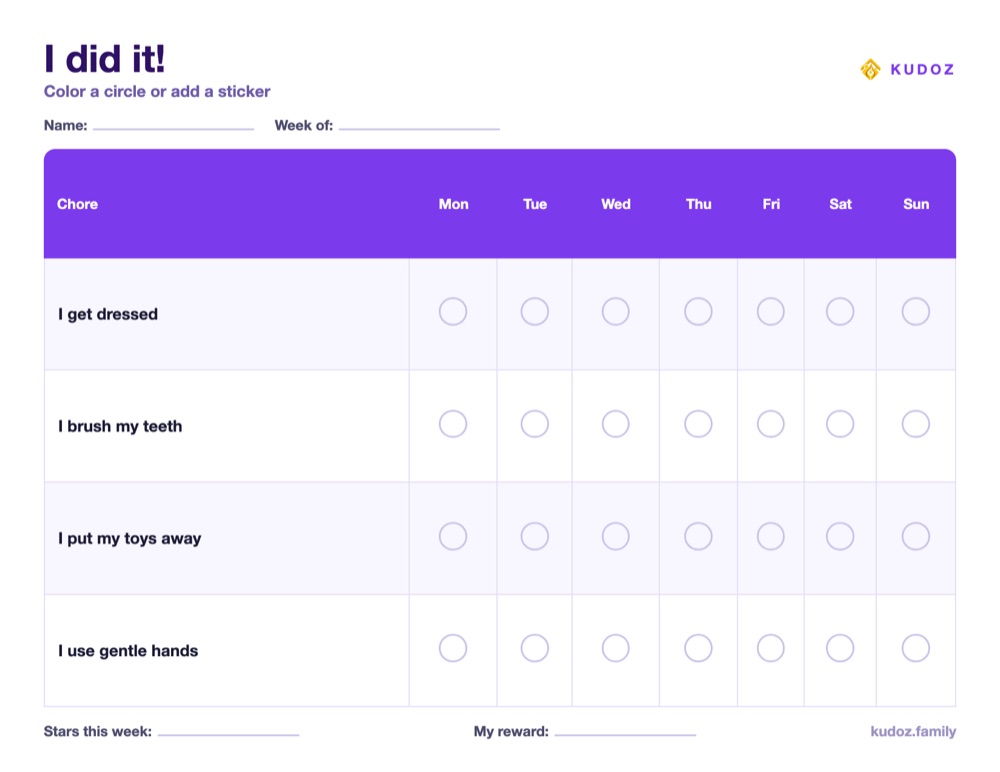
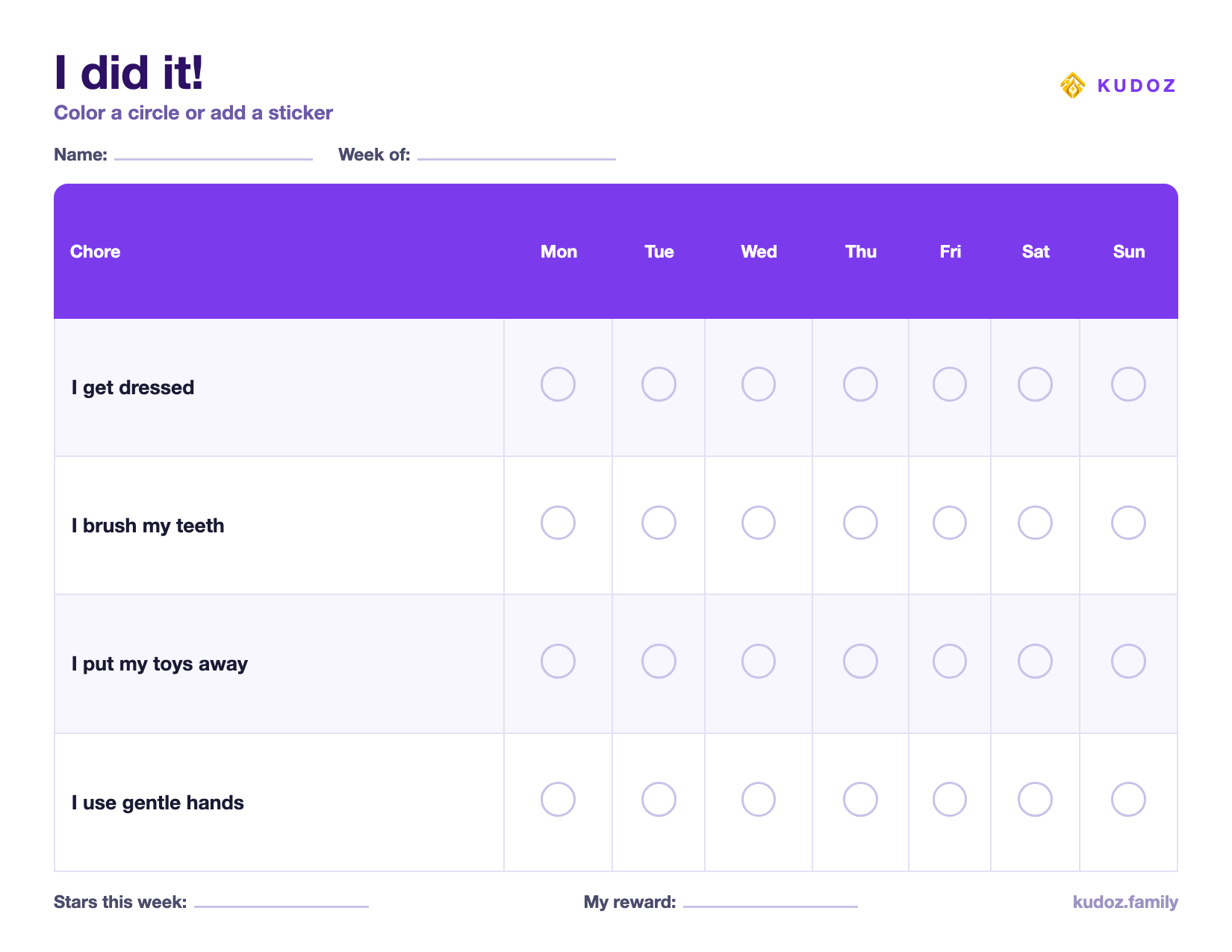
Draw a small picture next to each goal with your child: they'll remember the goal better, and they'll be proud of a chart they helped make. Cross out the goals you don't need yet.
Goals that fit ages 3 to 5
| Age | Goal ideas |
|---|---|
| 3 | Put my shoes in the basket; brush teeth with a grown-up; stay at the table for dinner |
| 4 | Get dressed with a little help; put my toys away before dinner; use gentle hands |
| 5 | Get dressed by myself; listen the first time; help set the table; get ready for bed when asked |
Our chores for 5-year-olds list has more ideas for kids who are ready for small jobs.
How to use it day to day
- Explain it once, simply. "Every time you put your toys away, you color a circle. Five circles, and we go to the park."
- Catch them doing it. Say it out loud and color the circle together, right away.
- Reward often. A small reward every three to five circles keeps a preschooler interested.
- Keep it positive. No crosses, no sad faces, no taking circles away.
- Change the goal when it's a habit, usually after two to four weeks.
Rewards for preschoolers
Social rewards are often the strongest at this age: a special dance, choosing the bedtime story, a trip to the playground, helping cook. The CDC notes they're cheap or free and can be more powerful than toys. Keep a few small treats for bigger milestones.
Color charts and clip charts at school
Many preschool and kindergarten classrooms use color or clip charts, where a child's clip moves up or down during the day. At home, a positive chart that only counts what goes well works better: it doesn't publicly mark a bad moment, and it keeps the focus on the next good one. If your child comes home upset about their color, talk about what went well that day and what they'll try tomorrow.
Next steps
Still working on the potty? Start with our potty training chart, which breaks it into six small steps. As your child grows, a sticker chart with a longer path, then a full behavior chart with several goals, take over. From about 6, apps like KUDOZ turn goals into missions with levels and a family reward shop, and kids can follow their own progress.
Questions parents ask
Do behavior charts work for 3-year-olds?
Yes, if the chart has one goal, the reward comes the same day and you add a picture next to the goal. At 3, a chart is a reminder and a celebration more than a system.
How many goals for a preschooler?
One at 3, two at 4, up to three or four at 5. Fewer goals means more success, and success is what keeps them trying.
Behavior chart for kindergarten at home or at school?
This chart is for home. If your child's teacher uses a color or clip chart in class, ask what goals they're working on and support the same ones at home, with your own positive chart.
Sources
- CDC, Essentials for Parenting Toddlers and Preschoolers, Tips for Using Praise and Rewards (updated April 30, 2026).
Turn the chart into a game.
KUDOZ is a family app that does all of this for you: missions, XP, coins and a reward shop your kids actually want to open. Available on iPhone and Android.


This guide shares general parenting information. It is not medical advice and does not replace a diagnosis or a care plan from a qualified professional.