

 Français
 עברית
 Русский
Sticker chart for kids: a free printable, and how to make stickers work
A sticker chart is the simplest reward system there is: one sticker each time your child does the thing you're working on, and a small reward when the row is full. Done right, it builds a habit in a few weeks. Here's a free chart and the details that make the difference.
Why sticker charts work
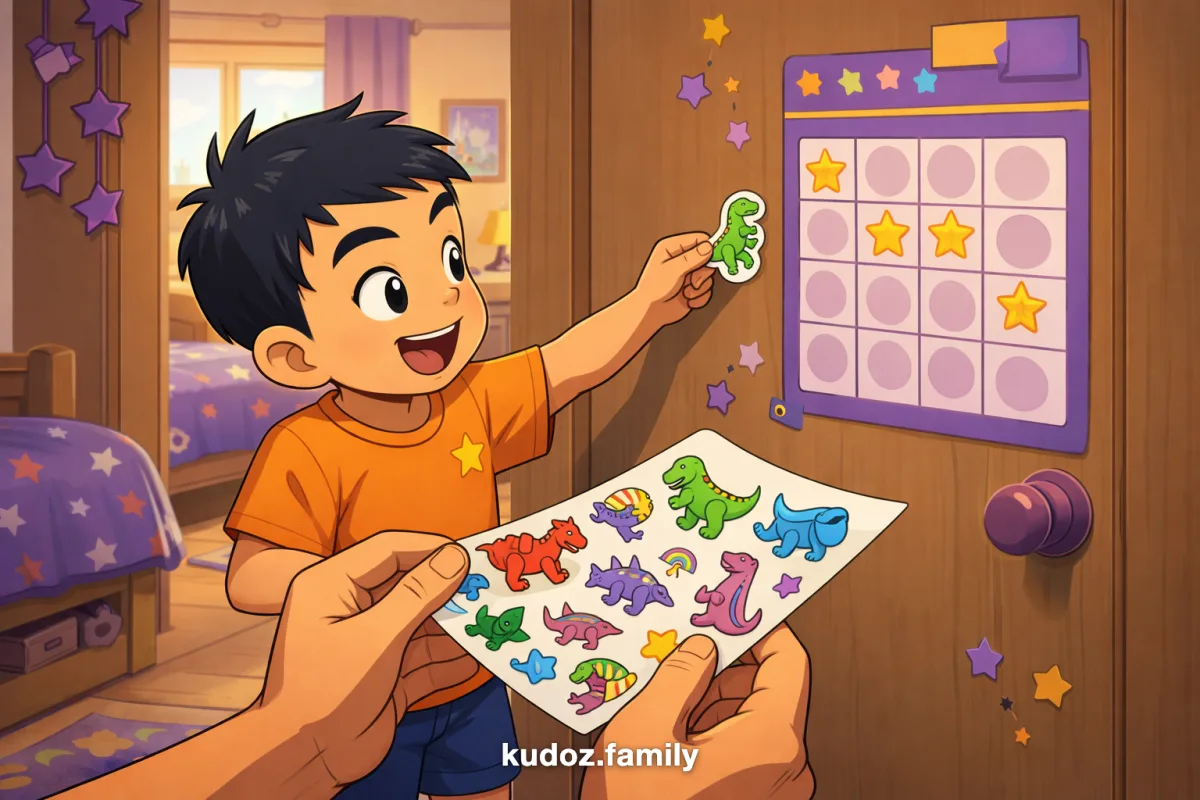
Young children live in the present. A reward next week means little to a 4-year-old; a sticker right now, on a chart they can see, means a lot. A sticker chart turns progress into something concrete: the row fills up, the reward gets closer, and your child can count how far they've come.
The CDC's advice for toddlers and preschoolers is to reward right after the behavior, with a chart that uses pictures and simple words and hangs where the child can see it. A sticker chart does exactly that.
Free printable sticker chart
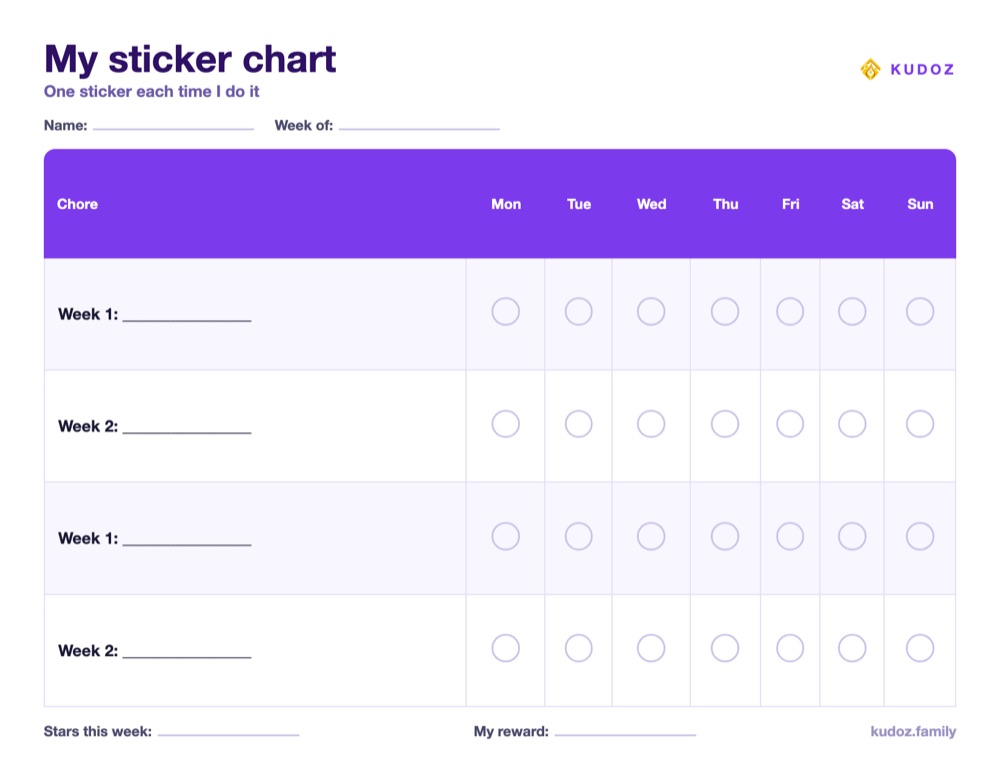
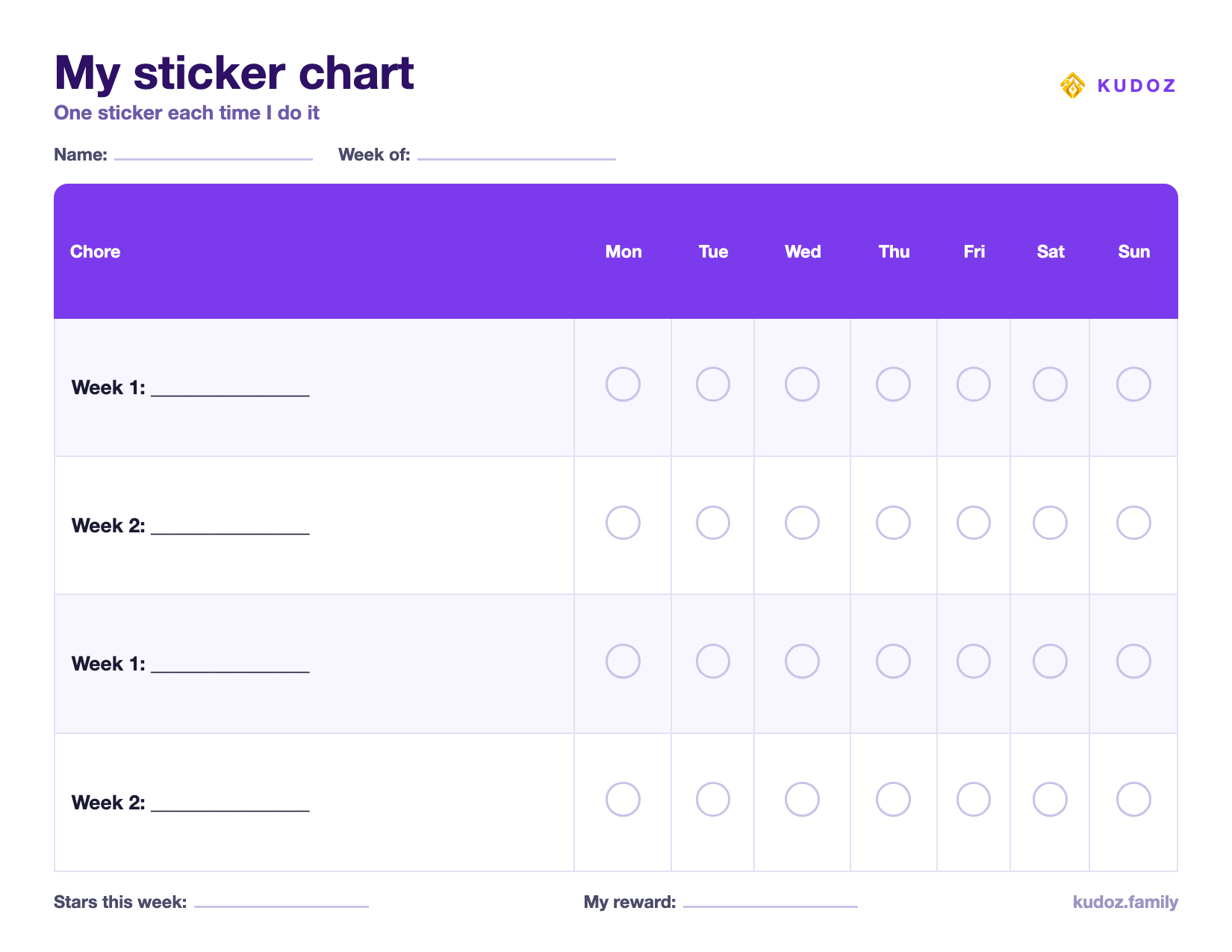
Write one goal on the first two rows (week 1 and week 2) and, if you want, a second goal on the next two. Each day your child does it, they add a sticker in that day's circle.
How many stickers to aim for, by age
| Age | Goals at once | Stickers to a reward | Reward |
|---|---|---|---|
| 2½ to 3 | 1 | 3 to 5 | Same day or next day |
| 4 to 5 | 1 or 2 | 5 to 7 | Within the week |
| 6 to 7 | 2 or 3 | 10 to 15 | Weekly, or a bigger one every two weeks |
These are starting points, not rules. The first reward should come fast so your child believes in the system. Once it's working, you can make the path a little longer.
Setting up a sticker reward system in 5 steps
- Choose one goal. The thing that matters most right now: staying in bed, getting dressed, brushing teeth without a fight, using the potty.
- Say it as an action. "Stay in my bed after the story", not "No getting up". Your child needs to know exactly what earns the sticker.
- Let your child pick the stickers. Dinosaurs, stars, unicorns: owning the stickers is half the fun.
- Agree on the reward before you start. Write it or draw it at the end of the row.
- Give the sticker right away, with specific praise: "You stayed in your bed all night. That's a sticker!"
Good goals for a sticker chart
- Brush teeth morning and night
- Get dressed by myself
- Stay in my bed after lights out
- Use the potty (see our potty training chart)
- Put my toys away before dinner
- Try one bite of a new food
- Get in the car seat without a fight
- Use gentle hands with my little brother or sister
For more ideas by age, see our list of chores for 5-year-olds and the full chores by age guide.
What to do when stickers stop working
- The reward is too far. Shorten the path. Three stickers to a reward again, then lengthen slowly.
- The goal is too hard. Break it down. "Get dressed" can start as "Put on my socks".
- Stickers were taken away. Don't. An earned sticker stays earned; deal with misbehavior separately.
- The habit is there. Celebrate! Retire the chart for that goal and keep praising it. Then pick a new one.
From stickers to the next step
Around 6 or 7, many kids outgrow stickers. They want points, levels or a bit of independence. That's the moment to move to a behavior chart with several goals, a reward chart with a prize menu, or a chore chart.
An app can take over from there. In KUDOZ, each goal becomes a mission on your child's own screen: they tap "I'm done", you approve with a tap, and they earn XP and Kudoz to spend in a family shop you fill with your own rewards. Stickers become levels, and the chart counts itself.
Questions parents ask
What age is a sticker chart for?
Sticker charts work best from about 2 and a half to 7. Younger children need the reward right away; older ones often prefer points, a chore chart or an app.
How many stickers before a reward?
Make the first reward easy: 3 to 5 stickers for a 3-year-old, 5 to 7 for a 5-year-old, up to 10 or 15 for a 7-year-old. Once it works, you can lengthen the path.
Do sticker charts work for potty training?
They often help, as long as the goal is something your child controls (sitting on the potty, trying) and the sticker comes immediately, not at the end of the day.
What if my child stops caring about stickers?
That usually means the chart has done its job, or the reward is too far away. Shorten the path, change the reward, or move to a new goal.
Sources
- CDC, Essentials for Parenting Toddlers and Preschoolers, Tips for Using Praise and Rewards (updated April 30, 2026).
Turn the chart into a game.
KUDOZ is a family app that does all of this for you: missions, XP, coins and a reward shop your kids actually want to open. Available on iPhone and Android.


This guide shares general parenting information. It is not medical advice and does not replace a diagnosis or a care plan from a qualified professional.