

 Français
 עברית
 Русский
Potty training chart: a free printable sticker chart, and how to use it
A potty chart turns each small success into something your toddler can see: one sticker for sitting on the potty, one for telling you in time, one for a dry nap. It helps as long as it stays a game, never a pressure. Here is a free printable potty training chart and what pediatricians actually recommend.
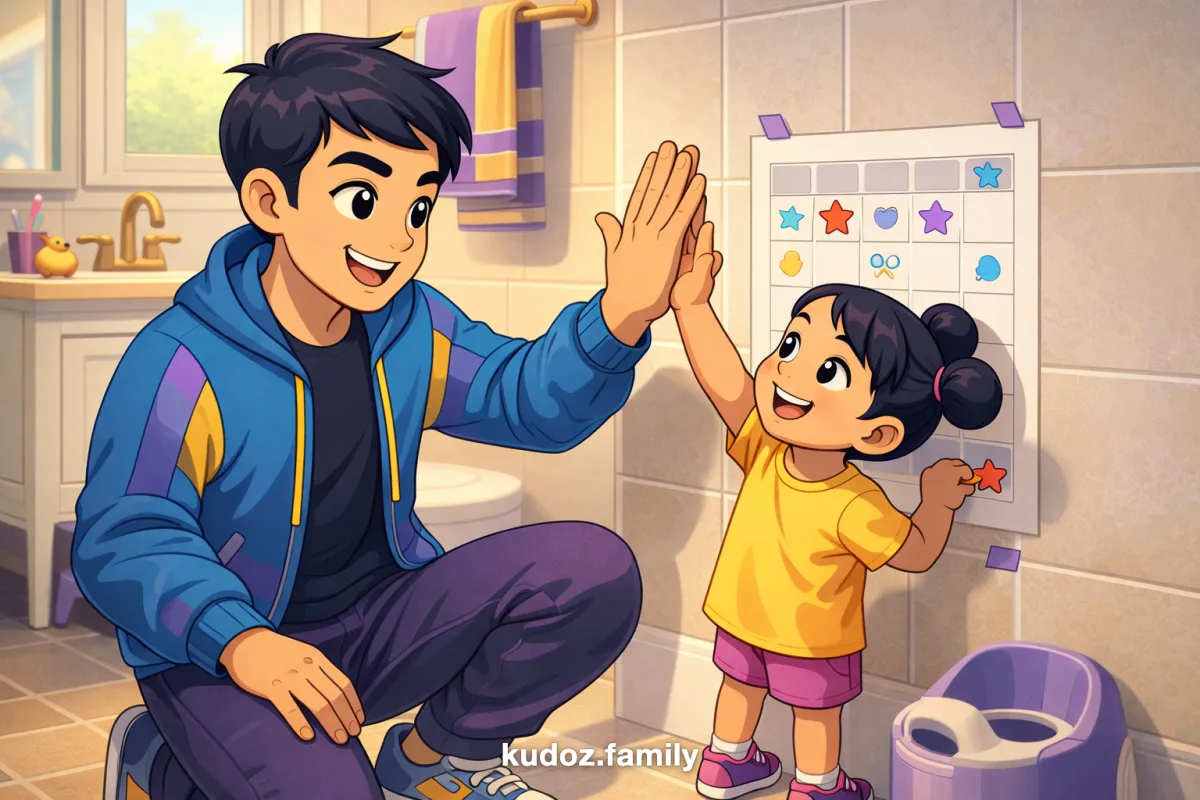
Signs your child is ready for potty training
A chart doesn't start potty training: your child gives the signal. According to the American Academy of Pediatrics (AAP), children usually show signs of bladder and bowel control between 18 and 24 months, and the average age to start in the United States is between 2 and 3. Your child is probably ready when they:
- stay dry for at least 2 hours during the day, or wake up dry from a nap;
- show they are about to pee or poop (they grunt, freeze or squat);
- can follow simple instructions;
- can walk to the bathroom and help pull their pants down;
- don't like a wet or dirty diaper and ask to be changed;
- ask to use the potty, or to wear "big kid" underwear.
If these signs aren't there yet, wait a few weeks. Starting too early often makes potty training take longer.
Free printable potty training chart
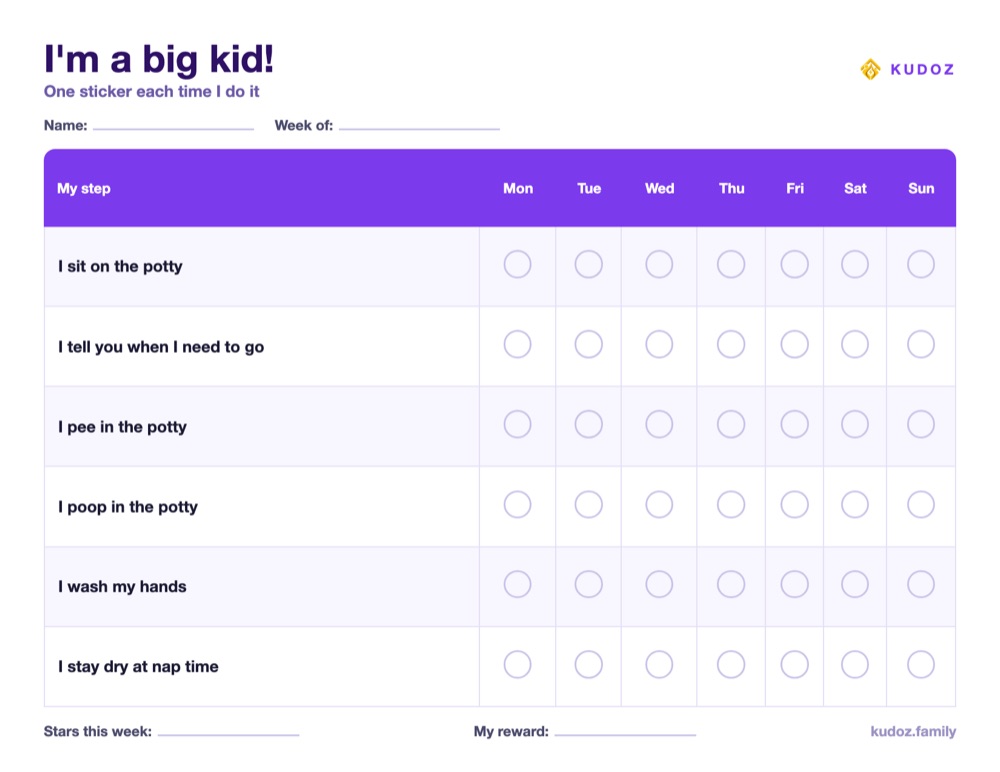
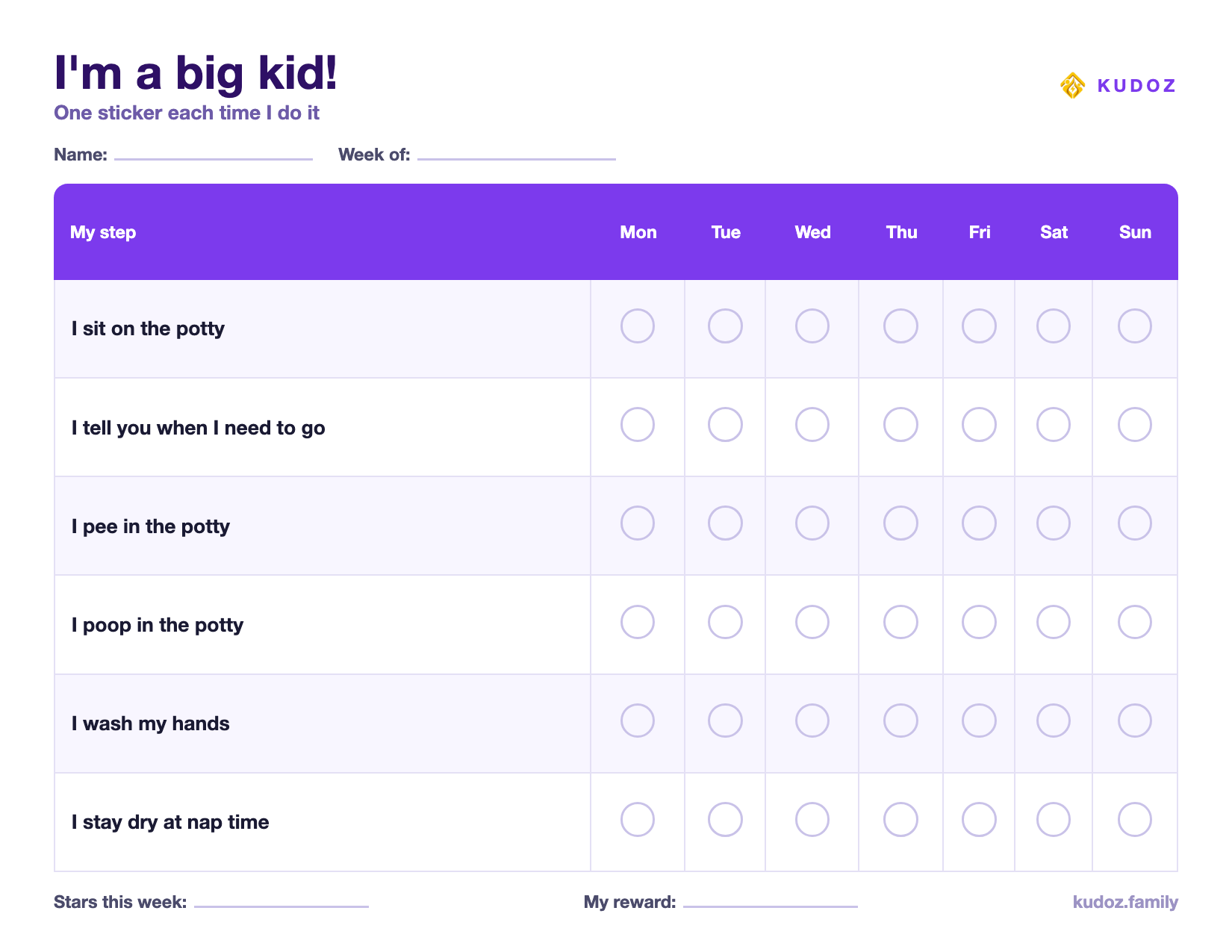
Keep only the steps your child is working on. At the start, "I sit on the potty" is enough, even if nothing happens: sitting down is already a step. Tape the chart at your child's eye level, next to the potty, so the sticker comes right away.
How to use a potty sticker chart without pressure
- The sticker celebrates a step; it isn't a payment. It's there so your child can see their progress. It's not a deal, and it's never taken away.
- Praise with specific words. The AAP suggests saying exactly why you are proud: "You felt you needed to go and you went to the potty all by yourself!"
- No candy, no punishment. Pediatricians advise avoiding treats and punishments: they distract your child from their own success.
- Let your child put the sticker on. It's their chart, and that's half the fun. Let them choose the sticker sheet too.
- Stay calm after accidents. No blame. Offer to clean up together, without making it a punishment.
- Follow your child's pace. As the AAP reminds parents, every child gets there at their own speed.
Potty training rewards that aren't candy
If you want something more than a sticker when a row is full, keep it small and about time together rather than things:
- choosing the next sheet of stickers;
- an extra bedtime story, or reading a favorite book twice;
- a video call to show grandma or grandpa the chart;
- picking the first pair of "big kid" underwear;
- a dance party in the living room.
A full row should feel like a celebration, not a purchase. Our sticker chart guide explains how many stickers to aim for at each age.
When the chart stops working
- Your child loses interest: switch to new stickers they pick, or go back to a single step at a time.
- They refuse the potty: take a break for a week or two without talking about it, then try again.
- They regress after a new baby, a move or starting daycare: this is common. Go back to the first steps, without scolding.
- They hold it in or seem to be in pain: talk to your pediatrician.
After potty training
The same sticker chart works for the next small steps: washing hands, getting dressed, putting toys away. Our preschool behavior chart and the list of chores for 2-year-olds show what a toddler can learn next, and the reward chart takes over as they grow.
Questions parents ask
When should I start potty training?
When your child shows they are ready, often between 2 and 3 years old. According to the American Academy of Pediatrics, children usually show signs of bladder and bowel control between 18 and 24 months, and most children in the United States are potty trained by age 4.
Should I reward potty training with candy?
No. The American Academy of Pediatrics advises avoiding treats and punishments: they distract from the success itself. A sticker is there to show progress, and the real reward is your pride, said with specific words.
Should I use one chart for pee and one for poop?
One chart is enough. Give each its own row, as on our printable, so your child gets a sticker for either. Poop often comes later than pee, so don't wait for both before celebrating.
What should I do after an accident?
Stay calm and don't scold. Accidents are part of learning. Let your child help clean up if they want to, without making it a punishment, and move on.
How long does potty training take?
Every child has their own pace, from a few weeks to a few months. Staying dry at night often comes later than during the day.
Sources
- American Academy of Pediatrics, HealthyChildren.org, The Right Age to Potty Train, last updated May 24, 2022.
- American Academy of Pediatrics, HealthyChildren.org, Potty Training: 12 Tips to Keep the Process Positive, last updated November 6, 2023.
Turn the chart into a game.
KUDOZ is a family app that does all of this for you: missions, XP, coins and a reward shop your kids actually want to open. Available on iPhone and Android.


This guide shares general parenting information. It is not medical advice and does not replace a diagnosis or a care plan from a qualified professional.