

 Français
 עברית
 Русский
Bedtime routine chart for kids: free printables, and how much sleep they need
Bedtime goes better when the steps are always the same and your child can see them. A bedtime routine chart turns "go to bed!" repeated ten times into a short list they follow on their own. Here are two free charts, sleep hours by age, and the routine pediatricians recommend.

Why a bedtime routine works
Children wind down better when the evening always runs in the same order. The American Academy of Pediatrics puts it simply: all children thrive on a regular bedtime routine. A chart makes the routine visible, so you can point instead of repeat, and your child knows what comes next.
The AAP also suggests keeping wake-up times, meals and play times regular, weekends included, dimming the lights before bed and avoiding screens for at least an hour before sleep.
How much sleep kids need, by age
| Age | Sleep per 24 hours |
|---|---|
| Toddlers, 1 to 2 years | 11 to 14 hours, including naps |
| Preschool, 3 to 5 years | 10 to 13 hours, including naps |
| School age, 6 to 12 years | 9 to 12 hours |
| Teens, 13 to 17 years | 8 to 10 hours |
Source: CDC. To set a bedtime, count back from wake-up time: a 9-year-old who gets up at 6:45 for school and needs about 10 hours should be asleep around 8:45.
Free printable bedtime routine charts
A weekly chart with seven steps, and a checklist in three parts for kids who like ticking boxes.
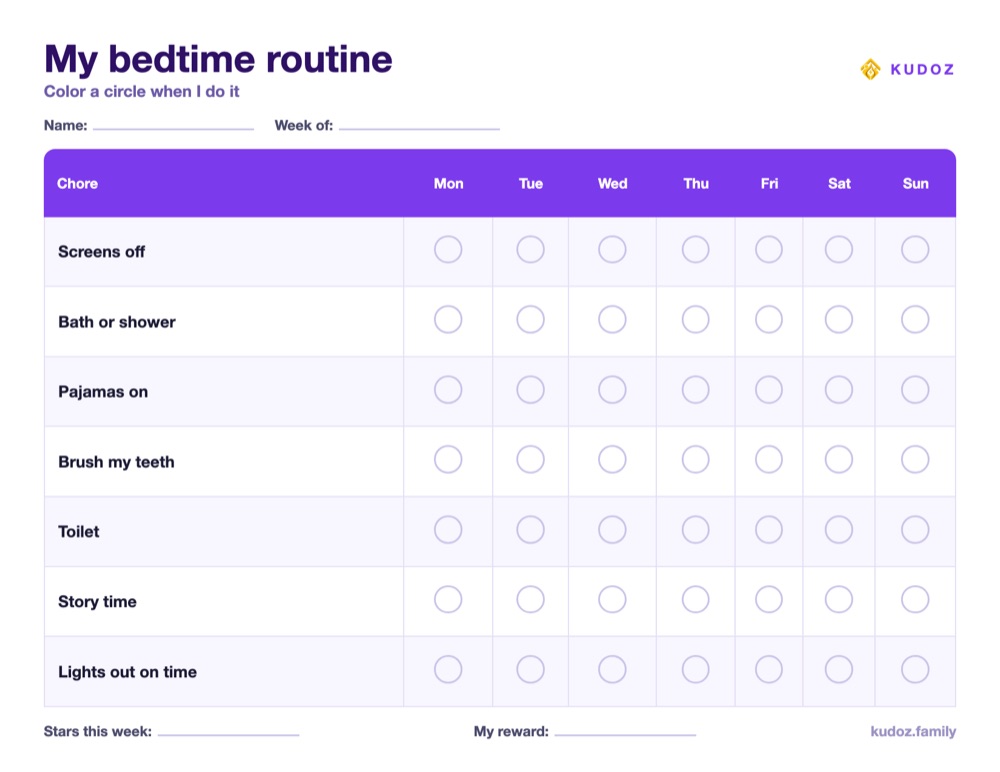
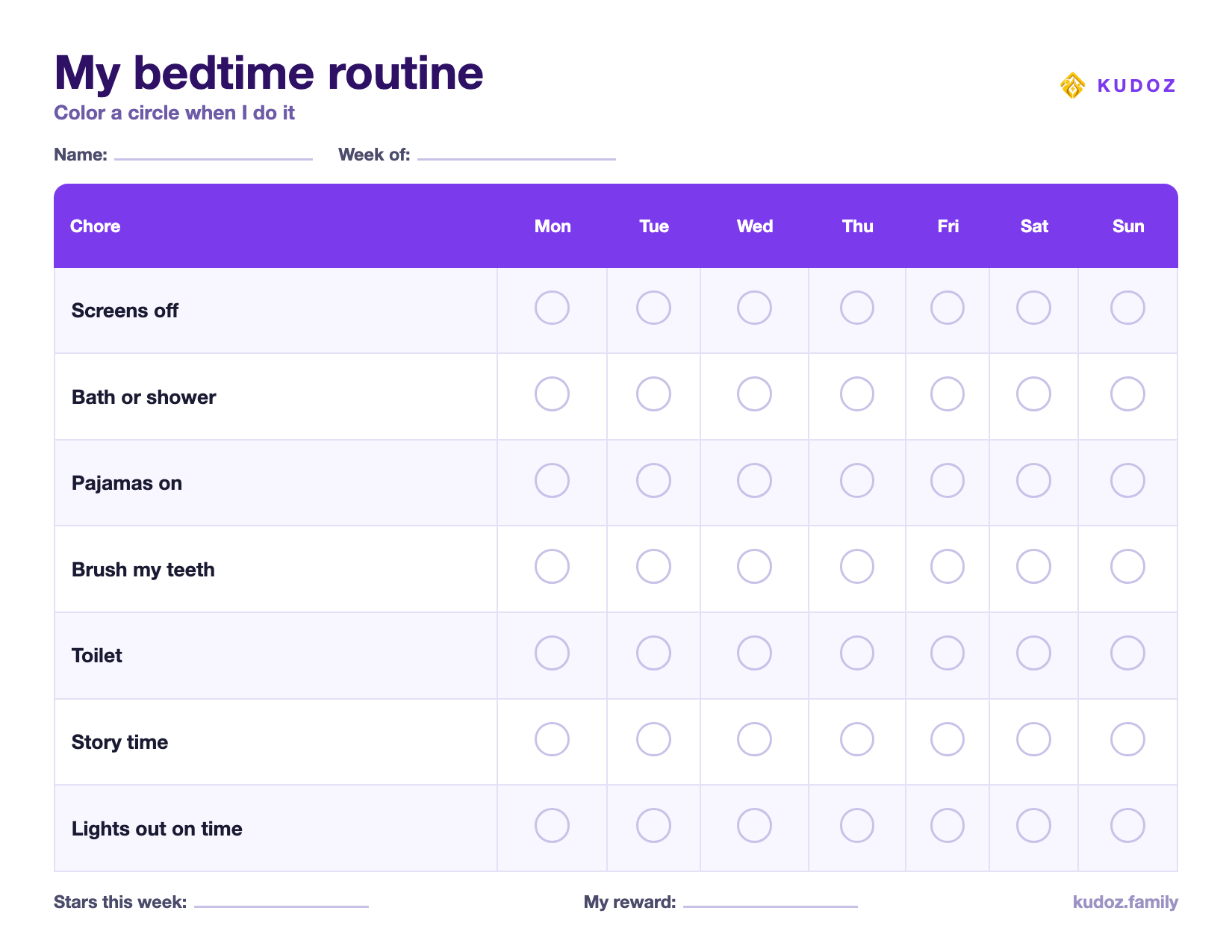
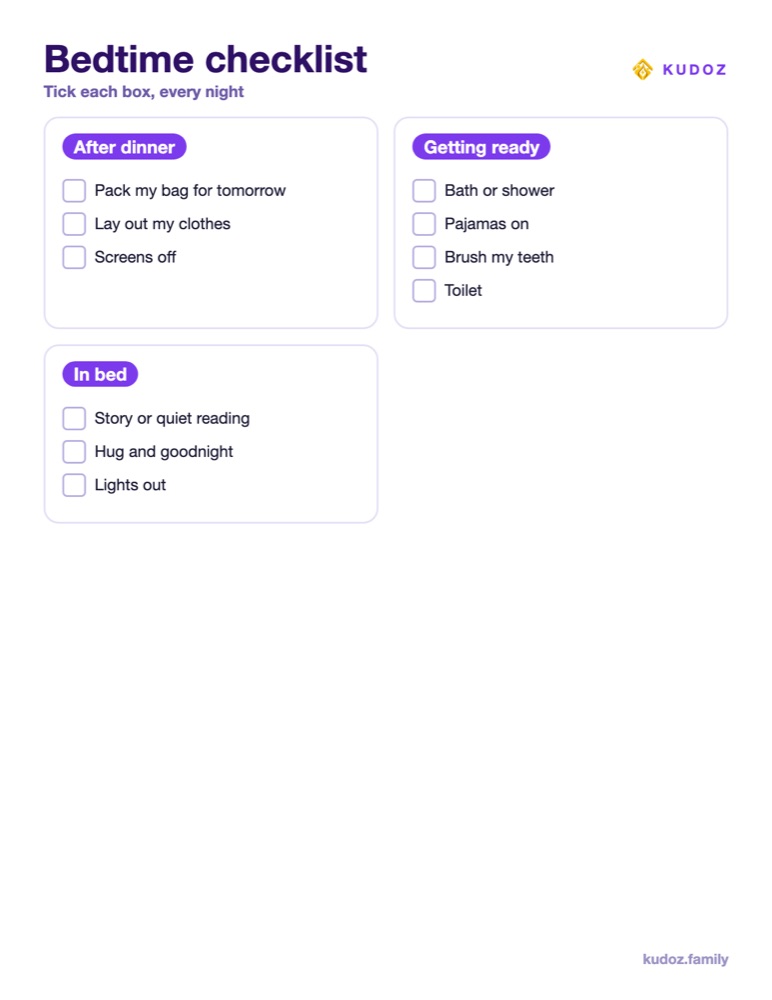
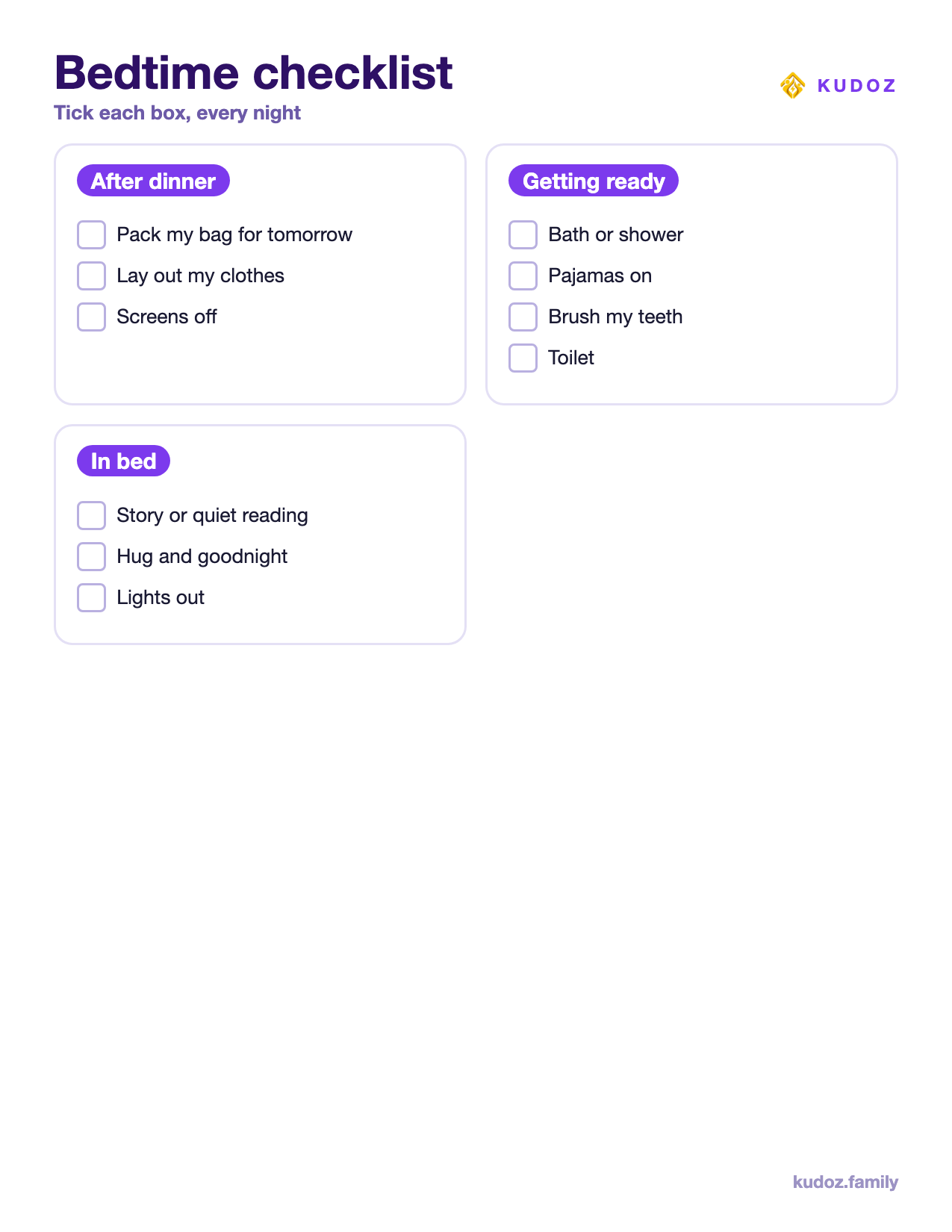
For children who can't read yet, draw a small picture next to each step: a toothbrush, pajamas, a book.
A bedtime routine that works, step by step
- Screens off at least an hour before bed, as the AAP advises.
- Prepare tomorrow: bag packed, clothes laid out. Mornings get easier too.
- Bath or shower, then pajamas.
- Teeth and toilet.
- A story or quiet reading in bed, with dimmed lights.
- Same goodnight words, every night, then lights out.
For toddlers, three steps are enough: the AAP's "brush, book, bed" is a good start.
Making the chart work
- Start at the same time every night, about 20 to 30 minutes before lights out.
- Point, don't repeat. "What's next on your chart?"
- Praise the routine, not each step. "You did your whole routine by yourself!"
- Reward staying in bed in the morning, not at night: a sticker at breakfast works well for younger kids. See our sticker chart guide.
- Keep it portable. On holiday or at grandparents', bring the same steps.
When bedtime is still a battle
Check the bedtime itself first: a child who isn't tired will fight sleep, and an overtired one too. Move bedtime 15 minutes earlier or later for a week and watch. If a child keeps getting up, walk them back calmly with as few words as possible. If sleep problems last, or your child snores loudly or seems tired all day, talk to your pediatrician.
For the other end of the day, see our morning routine chart (and the ADHD morning routine if focus is the hard part); for screens in the evening, the screen time chart; for behavior goals across the day, the daily behavior chart.
Bedtime as a mission
In KUDOZ, you can create a "Bedtime routine" mission that repeats every evening. Your child taps "Start" when the routine begins and "I'm done" in pajamas with teeth brushed; you approve, and they build a streak over the week.
Questions parents ask
What time should my child go to bed?
Count back from the time they need to wake up, using the sleep hours for their age. A 7-year-old who wakes at 7 a.m. and needs 9 to 12 hours should be asleep between 7 and 10 p.m., usually around 8.
How long should a bedtime routine take?
About 20 to 30 minutes for most kids. Long enough to wind down, short enough to keep it the same every night.
Do bedtime charts work for toddlers?
Yes, with pictures and three or four steps. The American Academy of Pediatrics suggests starting early with a simple routine like brush, book, bed.
What if my child keeps getting out of bed?
Walk them back calmly with as few words as possible, every time. A sticker in the morning for staying in bed can help younger kids.
Sources
- CDC, About Sleep (updated May 15, 2024), recommended sleep by age.
- American Academy of Pediatrics, HealthyChildren.org, Healthy Sleep Habits: How Many Hours Does Your Child Need? (updated August 7, 2026).
Turn the chart into a game.
KUDOZ is a family app that does all of this for you: missions, XP, coins and a reward shop your kids actually want to open. Available on iPhone and Android.


This guide shares general parenting information. It is not medical advice and does not replace a diagnosis or a care plan from a qualified professional.