

 Français
 עברית
 Русский
Morning routine chart for kids: free printables to get out the door on time
School mornings are short, and every step your child has to be reminded of costs you a minute and some patience. A morning routine chart puts the steps on the wall, in order, so your child can follow them instead of waiting for you. Here are two free charts and a routine that works.

Why a morning routine chart helps
Children cope better when they know what comes next. The CDC's advice for parents of young children is that routines help kids feel safe and secure, because they know what to expect, and its example day starts with "wake up and morning routine". A chart makes that routine visible: you point at the next step instead of repeating it, and your child gets the satisfaction of finishing on their own.
It also takes the morning out of your voice. "What's next on your chart?" starts fewer arguments than "Get dressed!" said for the third time.
Free printable morning routine charts
A weekly chart with seven steps, and a before-school checklist for kids who like ticking boxes.
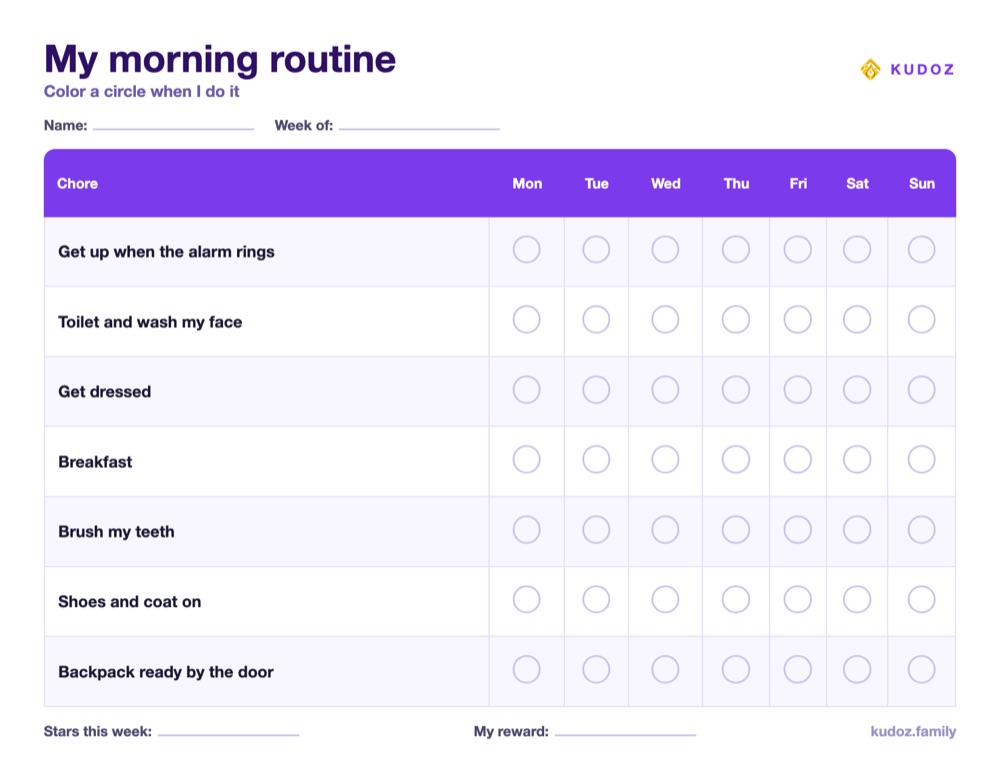
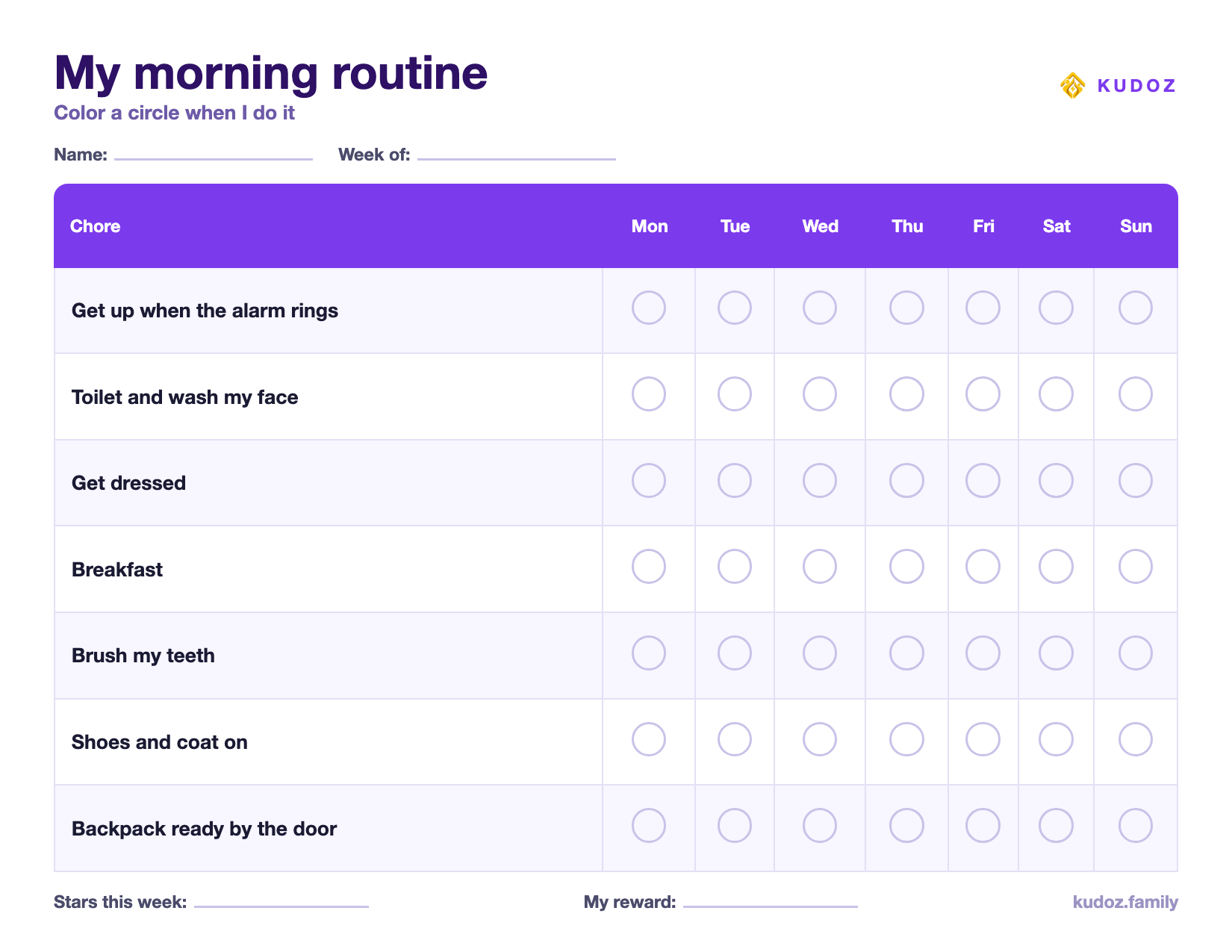
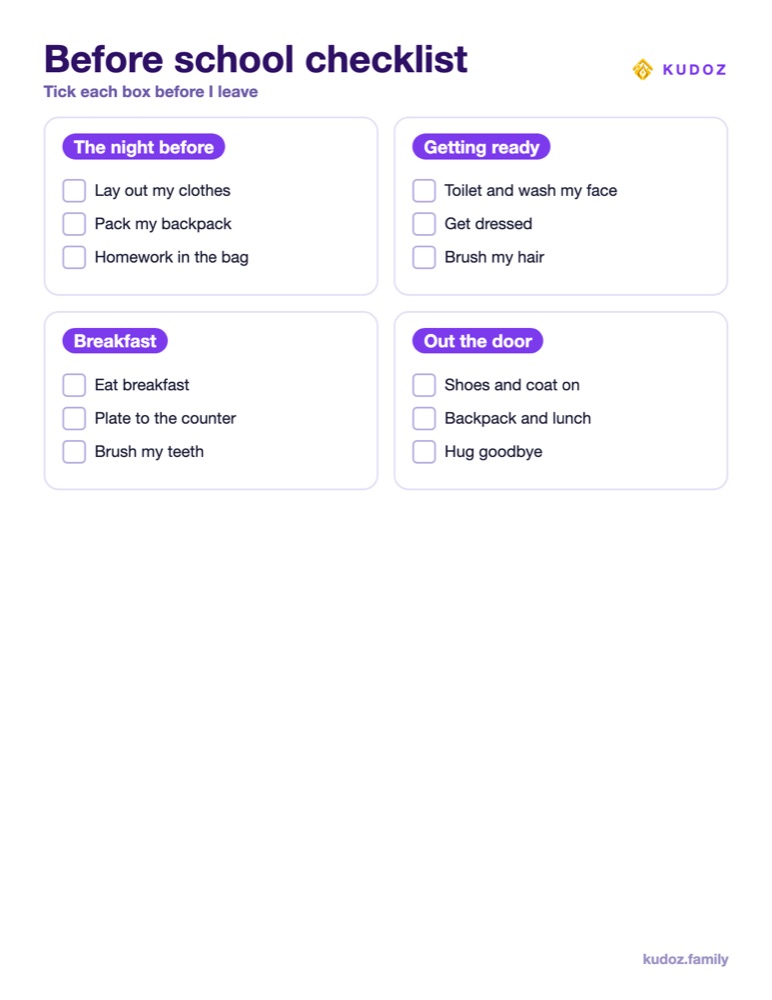
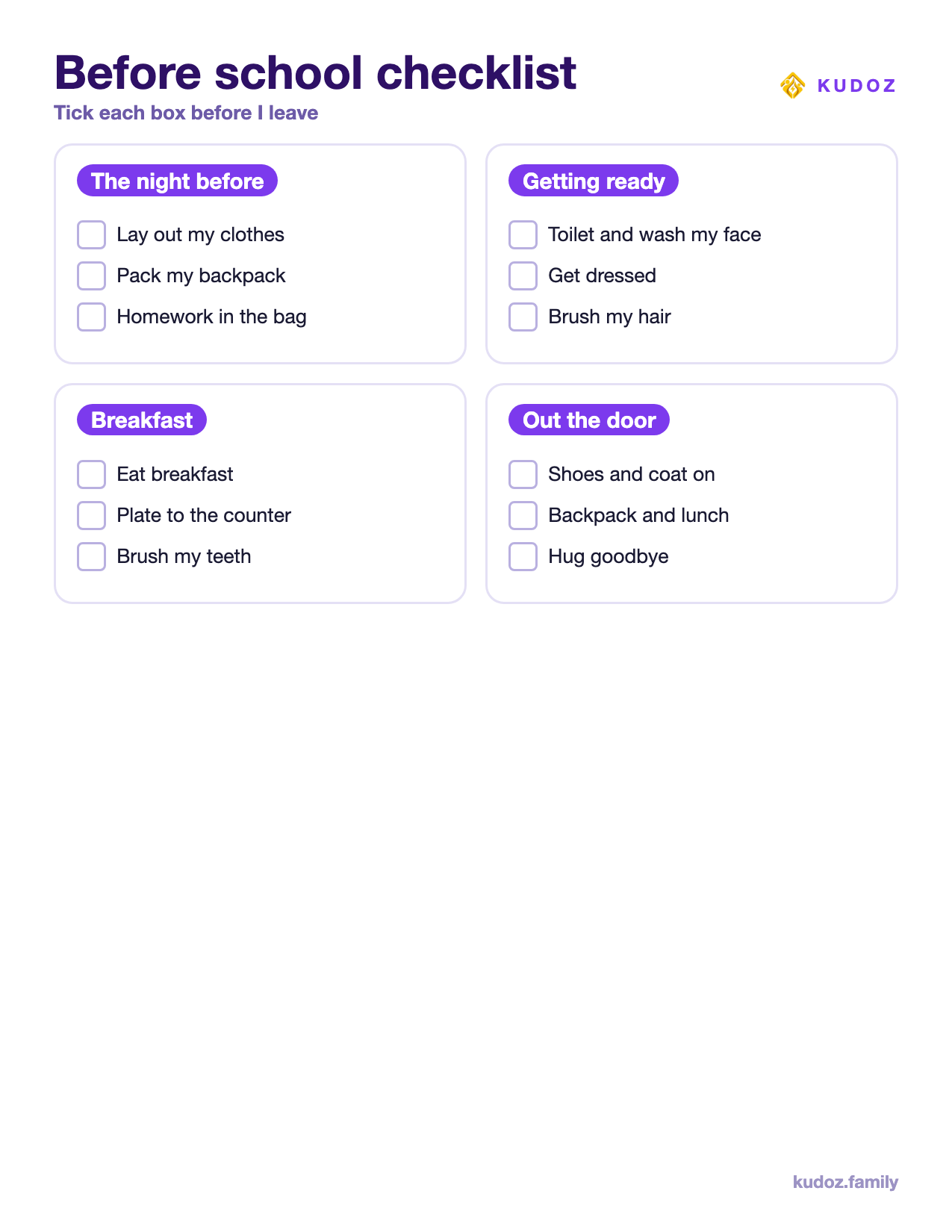
For children who can't read yet, draw a small picture next to each step: a toothbrush, a shirt, a bowl. Cross out what your child doesn't need and keep the chart where the routine happens, often the fridge or the bedroom door.
A morning routine that works, in order
- Get up at the same time, school days and, as far as possible, weekends.
- Toilet and wash right away, before anything else starts.
- Get dressed in the clothes laid out the night before.
- Breakfast at the table, without a screen.
- Teeth after breakfast.
- Shoes, coat and backpack by the door.
- Free time if there's any left: the reward for finishing early.
The order matters less than keeping it the same every day. Put getting dressed before breakfast if your child slows down once they sit.
Move what you can to the evening
The fastest morning is the one half prepared the night before: clothes laid out, backpack packed, homework in the bag, lunch in the fridge. Those steps belong on the bedtime routine chart, not the morning one. A morning chart with five steps is followed; one with twelve is ignored.
Making the chart stick
- Build it together. Ask your child which steps go on the chart and in what order. A routine they helped plan is one they follow.
- Point, don't repeat. Let the chart do the reminding.
- Praise the whole routine. "You were ready at the door by yourself!" means more than praise for each sock.
- Reward with time, not things. Finishing early can mean ten minutes of play before leaving. A sticker chart works well for younger kids.
- Keep screens for last, if at all. Once a screen is on, the routine stops. Our screen time chart can help set the rule.
If mornings are especially hard because of attention or focus, our ADHD morning routine guide goes further, with fewer steps and more preparation.
The morning as a mission
In KUDOZ, you can create a "Morning routine" mission that repeats every school day. Your child taps "I'm done" when they're ready at the door; you approve, and they earn XP and Kudoz coins to spend in a family shop stocked with rewards you choose.
Questions parents ask
How long should a morning routine take for kids?
Most school-age kids need 30 to 45 minutes from waking up to leaving, breakfast included. Time your child's routine once on a calm day, then add 10 minutes.
What should be on a kids' morning routine chart?
Five to seven steps in order: get up, toilet and wash, get dressed, breakfast, teeth, shoes and coat, backpack. Anything that can be done the night before belongs on the bedtime chart.
Should screens be allowed in the morning?
Many families keep screens off until the whole routine is done. If you allow them, make them the last step, after shoes and backpack.
What age can a child follow a morning routine chart?
From about 3 with a picture chart and three or four steps done together. By 6 or 7, most kids can follow a written chart on their own.
Sources
- CDC, Essentials for Parenting Toddlers and Preschoolers, Creating Structure and Rules (updated April 30, 2026).
Turn the chart into a game.
KUDOZ is a family app that does all of this for you: missions, XP, coins and a reward shop your kids actually want to open. Available on iPhone and Android.


This guide shares general parenting information. It is not medical advice and does not replace a diagnosis or a care plan from a qualified professional.