

 Français
 עברית
 Русский
Daily behavior chart: free printable daily and weekly charts
Some kids need feedback every day, sometimes several times a day; others do fine with a weekly goal. Here are a daily behavior chart split into parts of the day, a weekly chart, and how to pick the right one for your child.

Daily or weekly: which one?
| Daily chart | Weekly chart | |
|---|---|---|
| Feedback | Several times a day | Once a day |
| Best for | Younger kids, ADHD, a hard phase | Behavior that's already improving |
| Reward | Small daily rewards | One reward at the end of the week |
| Effort for parents | Higher | Lower |
The principle is the same for both, and it comes from what works with young children: reward right after the behavior. The CDC notes that a quick reward is the most effective way to change a young child's behavior. The more your child needs that speed, the more a daily chart helps.
Free printable daily behavior chart
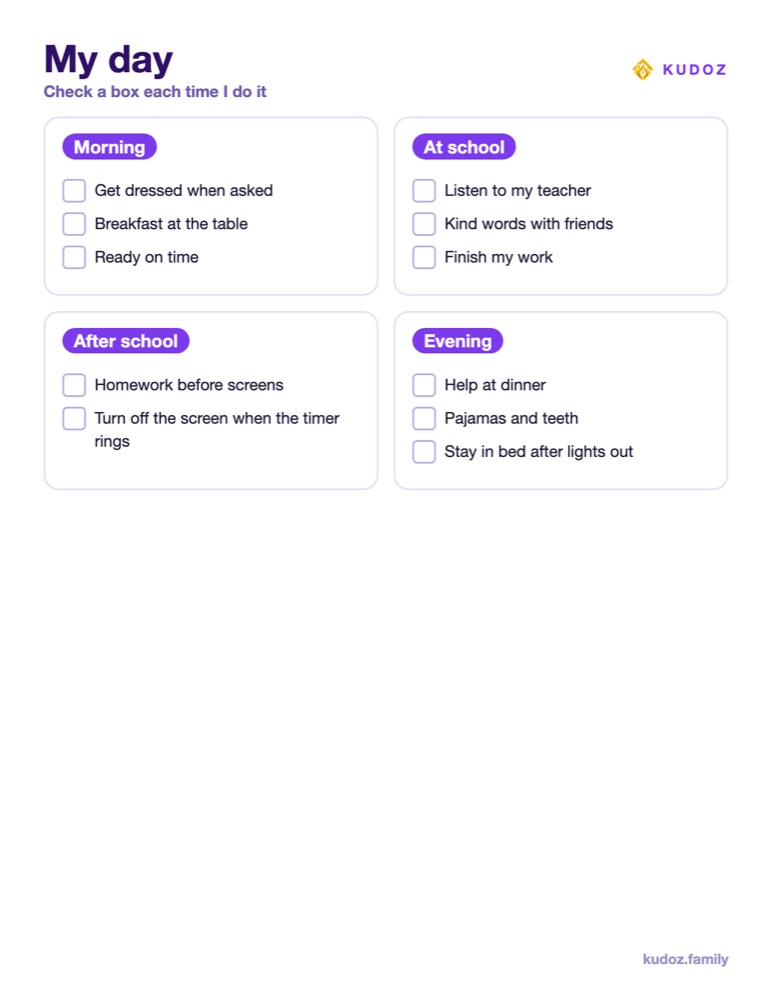
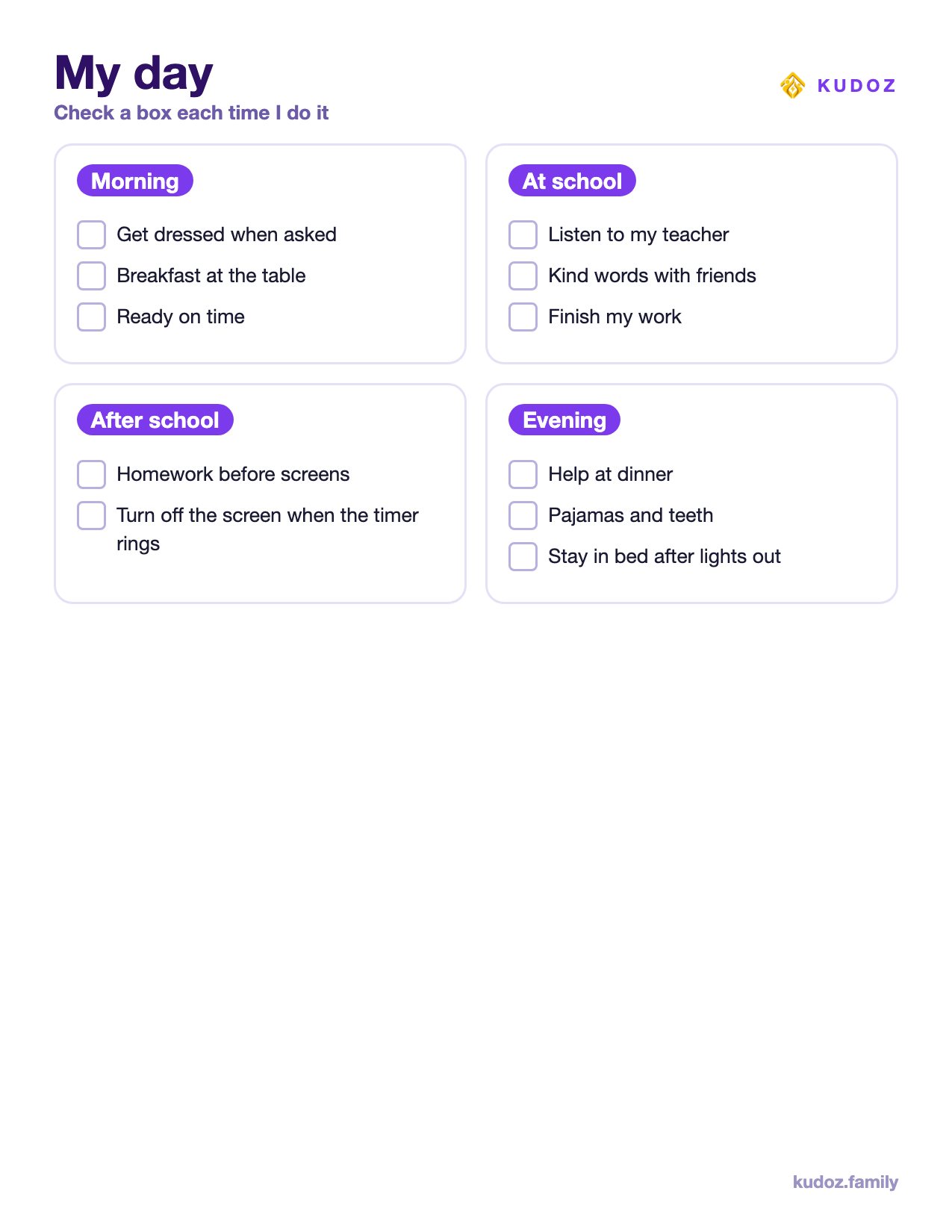
Keep only the goals you're working on, ideally one or two per part of the day. Check boxes as they happen, not in the evening.
Free printable weekly behavior chart
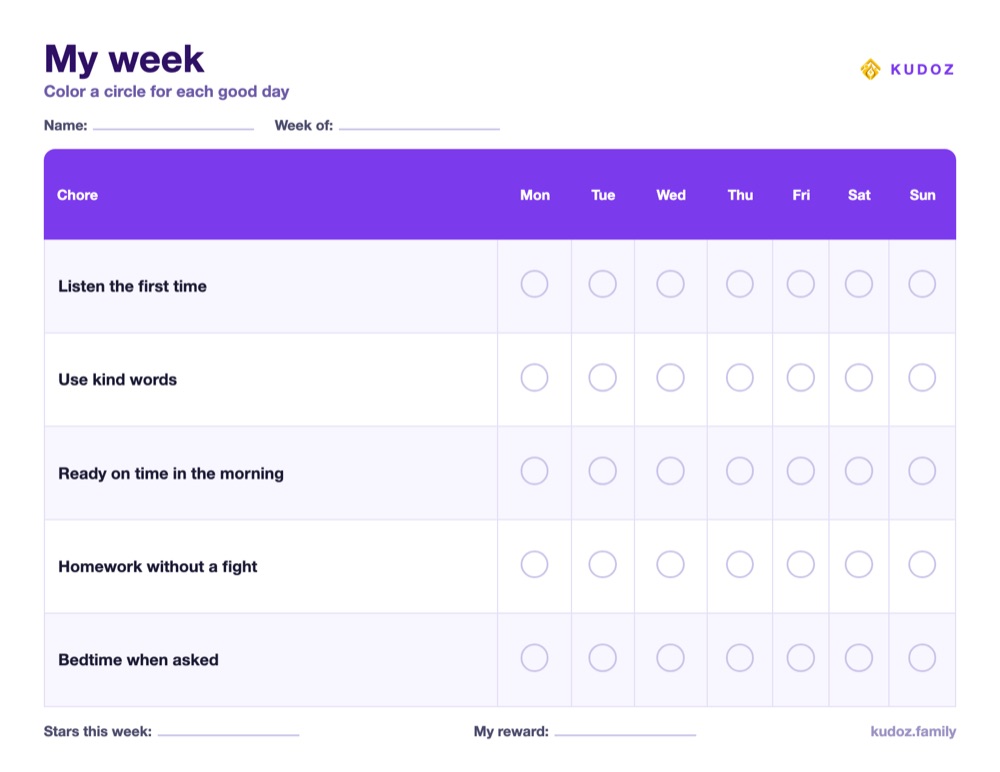
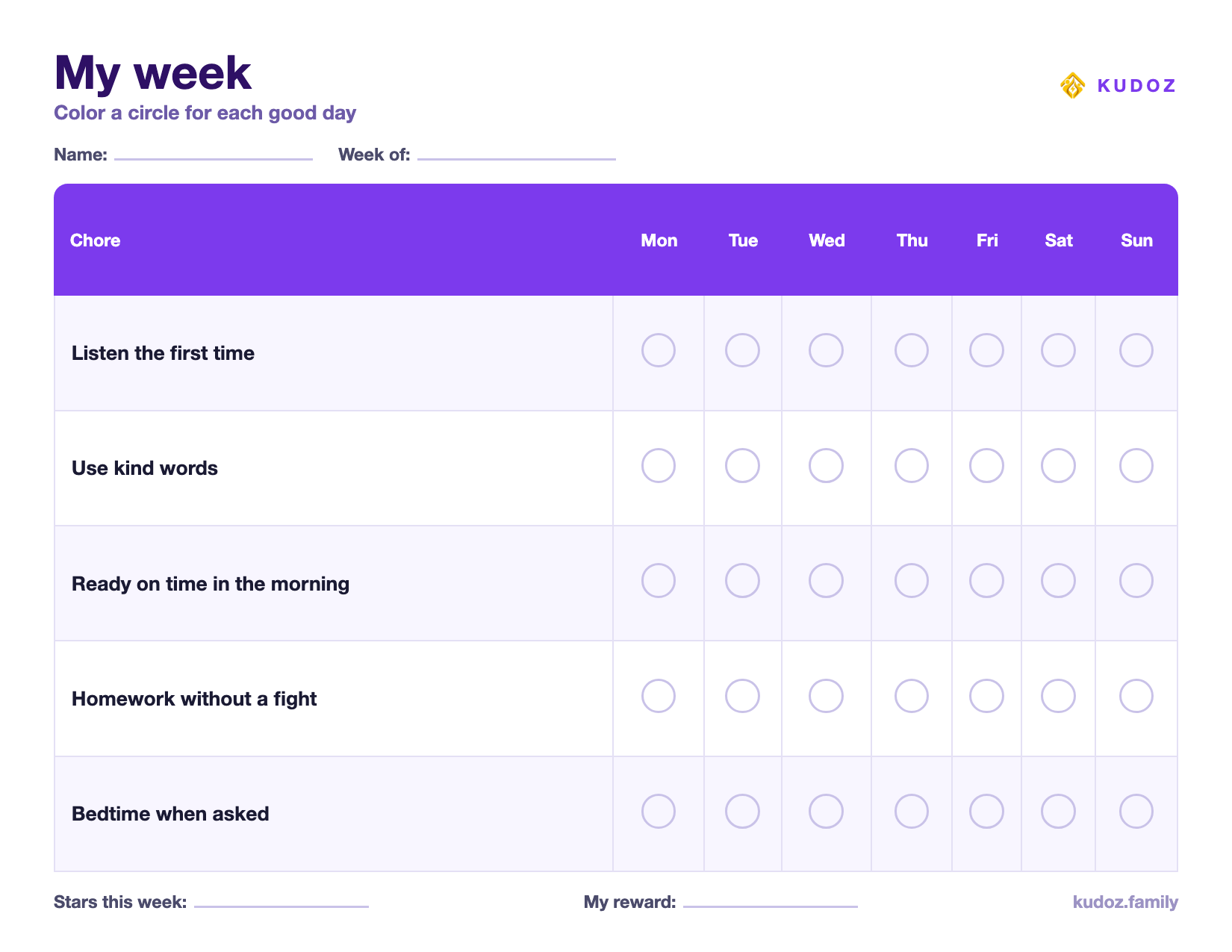
How to use a daily behavior chart
- Choose one or two goals per part of the day, written as what to do: "Kind words with friends", not "No fighting".
- Check right away. A box checked at 8 a.m. for getting dressed means more than a recap at bedtime.
- Agree on a daily reward for a good day (for example, 4 checks out of 6), and a bigger one at the end of the week.
- Say what you saw. "You turned off the tablet when the timer rang, that's a check!"
- Move to a weekly chart when good days become the norm.
Working with school
If a behavior shows up mostly at school, ask the teacher which one or two goals matter most and whether they can confirm them at the end of the day, with a check or a word. Keep it positive: the chart counts what went well. Many classrooms already use their own color or clip chart; your chart at home doesn't need to copy it.
Common mistakes
- Too many goals: twelve boxes a day is a job, not a chart.
- Taking checks away: the CDC advises never taking away a reward your child has earned.
- Only negatives: a chart full of crosses discourages. Track what to do, not what not to do.
- Never moving on: once it works, switch to weekly, then retire the goal.
For the basics of behavior charts, see our behavior chart guide; for ages 3 to 5, the preschool behavior chart; for kids with ADHD, the ADHD chore chart. To set the screen rules once and for all, see the screen time chart, and for the first part of the day, the morning routine chart. When big feelings are behind the behavior, start with a feelings chart.
Questions parents ask
Daily or weekly behavior chart?
Daily if your child needs fast feedback (younger kids, kids with ADHD, a hard phase); weekly once the behavior is improving and a once-a-day check is enough.
How do I use a daily behavior chart with school?
Ask the teacher to check one or two goals in the school part, or ask your child at pickup. Keep the school goals few and positive.
What reward for a daily behavior chart?
A small daily reward (choosing the story, 10 minutes of play together) for a good day, and a bigger one at the end of the week. Never take earned checks away.
Sources
- CDC, Essentials for Parenting Toddlers and Preschoolers, Tips for Using Praise and Rewards (updated April 30, 2026).
Turn the chart into a game.
KUDOZ is a family app that does all of this for you: missions, XP, coins and a reward shop your kids actually want to open. Available on iPhone and Android.


This guide shares general parenting information. It is not medical advice and does not replace a diagnosis or a care plan from a qualified professional.