

 Français
 עברית
 Русский
Feelings chart for kids: a free printable emotions chart with 12 faces
A child who yells or slams a door is feeling something they can't put into words yet. A feelings chart gives them the words, and a face to point at when the words won't come. Here is a free emotions chart with 12 faces, an emotion wheel for kids who are ready for more precise words, a calm-down sheet for angry moments, and how to use them at home.
Why a feelings chart helps
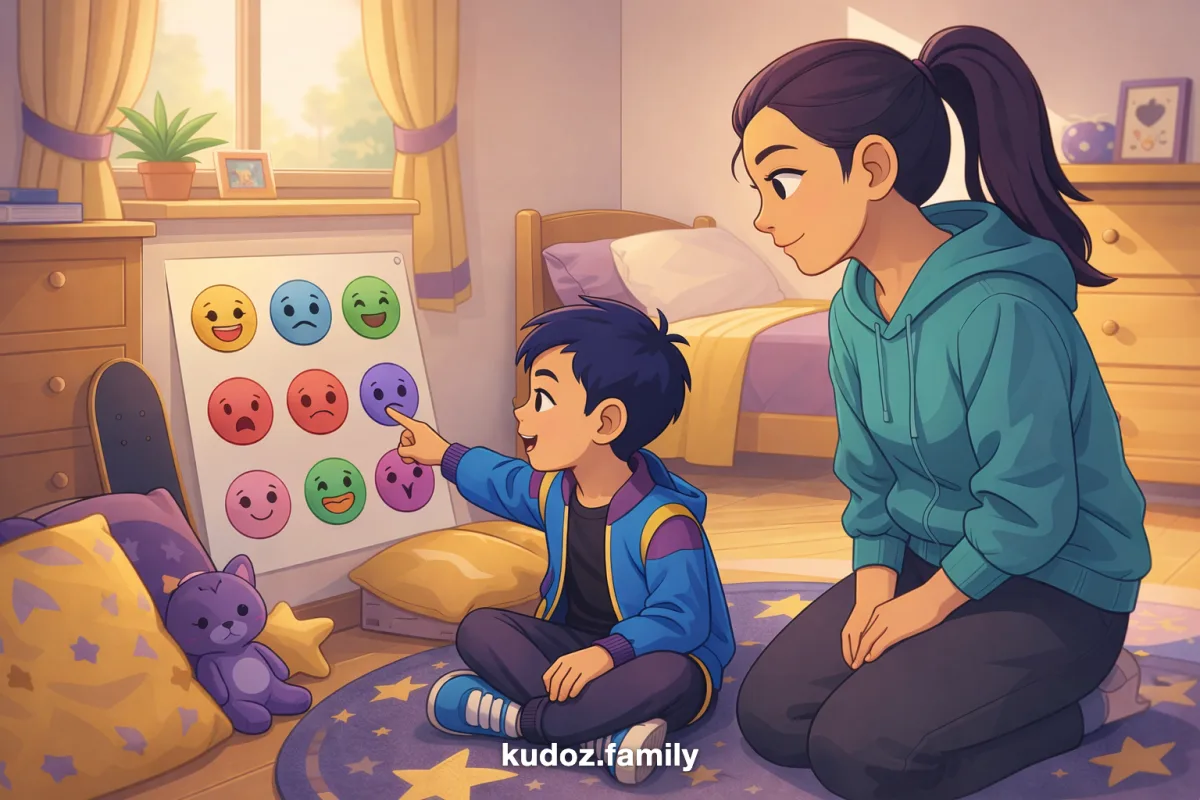
Before a child can say "I'm frustrated", they show it: they yell, hit, sulk or cry. Putting a word on the feeling is the first step to learning to handle it. The CDC advises parents to name the emotion out loud, with simple words, and suggests a feelings chart to help do exactly that.
The chart also gives your child another way in when words don't come: they can point to a face. In the middle of a meltdown, that is often easier than talking.
Free printable feelings chart
For little ones, cut out four faces to start with: happy, sad, angry and scared. Add the others over the months.
Free printable emotion wheel for kids
Once your child knows the basic feelings, an emotion wheel helps them find a more precise word. Start in the middle with the big feeling, then look at the three words around it: "I'm angry" can become "I'm frustrated", "I'm jealous" or "I'm annoyed". The more precise the word, the easier it is to find what will help.
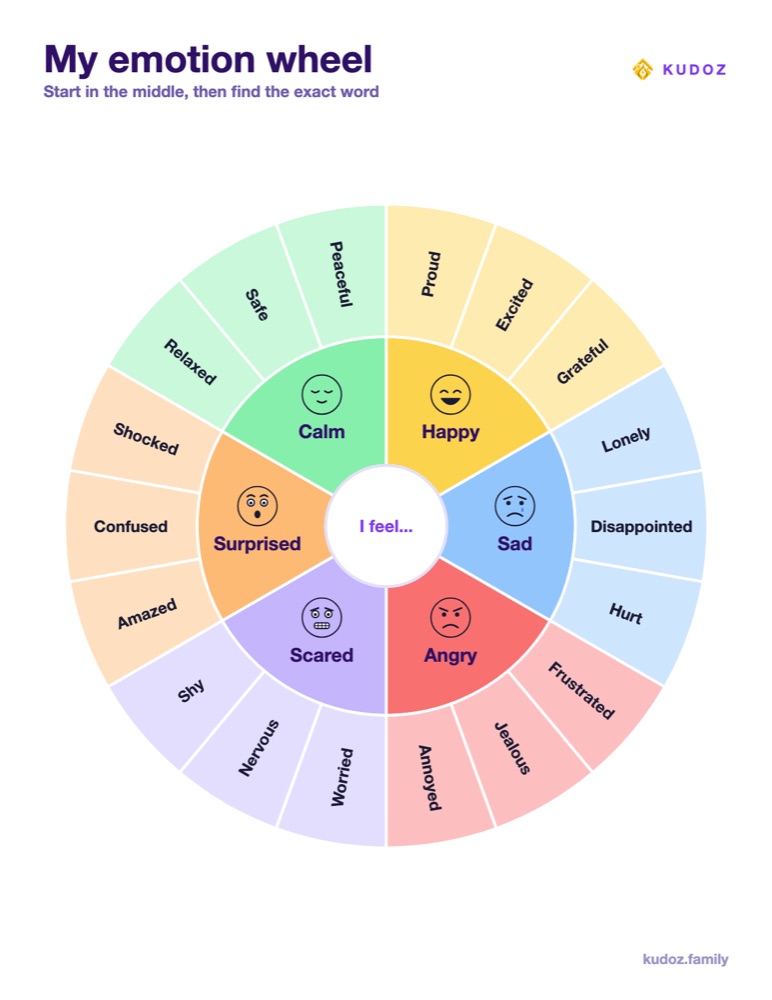
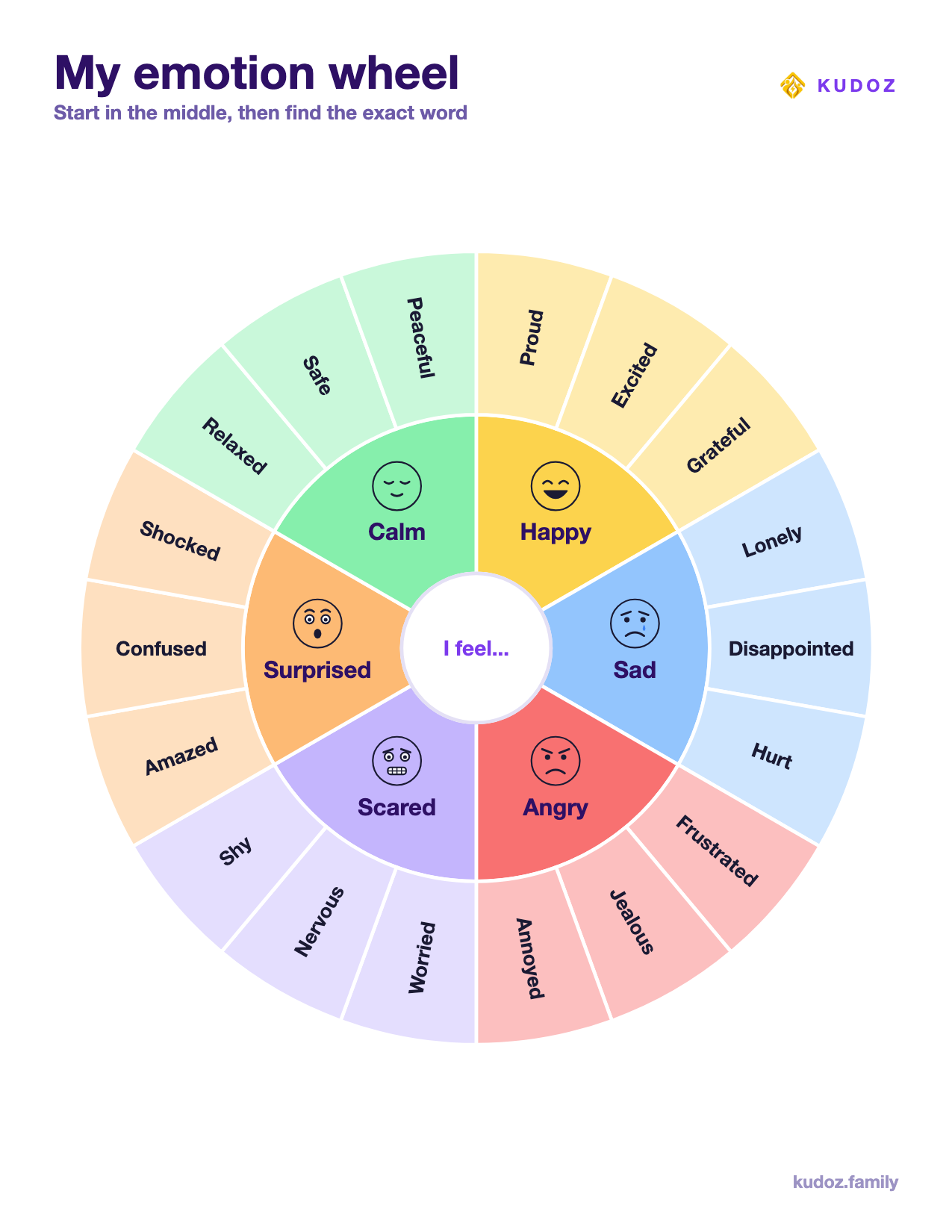
Use the wheel the same way as the chart: in a quiet moment first, then during big feelings. Younger kids can stay with the faces in the middle.
How to use it every day
- A quiet moment each day. At snack time or bedtime: "Show me how you feel today." Then "Why?", without judging.
- Name your own feelings. "I need some quiet tonight, I'm tired." Children learn by watching how their parents handle their own feelings.
- During big feelings, point instead of asking. "Are you angry?" while pointing to the face. If you guess wrong, your child will correct you: the CDC advises taking a guess even when you're not sure.
- Accept the feeling, set a limit on the behavior. "It's OK to be angry, but it's not OK to throw the blocks."
- Then look for a solution together, once things are calm. Don't rush to fix it before the feeling has been heard.
When I feel angry, I can...
Choose two or three ideas with your child that work for them, and practice them when everything is fine: slow breathing is hard to learn in the middle of a meltdown.
What not to do
- Deny the feeling: "You're fine" or "Stop crying" teaches a child to hide feelings, not to handle them. The CDC advises against telling a child to stop feeling a certain way.
- Punish the feeling instead of the behavior.
- Try to talk it through at the peak. Calm first, words later. The CDC suggests calming your own emotions first, for example with a few deep breaths.
If meltdowns are very frequent, very long, or worry you, talk to your pediatrician. For kids with ADHD, see also our ADHD morning routine, where big feelings often show up first.
Feelings, behavior and family rules
Feelings explain a lot of difficult behavior, but they don't excuse all of it. Once your child can say what they feel, a behavior chart helps them work on one or two specific behaviors, and clear family rules tell them what is expected.
Questions parents ask
What is a feelings chart for?
It helps a child recognize and name what they feel. The CDC suggests using a feelings chart to help name emotions, as part of its tips for parents of toddlers and preschoolers.
What age is a feelings chart for?
You can start with toddlers, using four faces (happy, sad, angry, scared) and a lot of help. Older kids can use all twelve faces, and even point to more than one.
What is an emotion wheel for kids?
A circle with a few core feelings in the middle and more precise words around each one. Your child starts with the big feeling ("angry"), then looks for the exact word ("frustrated", "jealous" or "annoyed"). It suits kids who already know the basic feelings.
How do I use a feelings chart every day?
Pick a quiet moment each day ("Show me how you feel today"), and during big feelings, point to a face instead of asking a lot of questions.
Should I accept all of my child's feelings?
Yes for the feelings, not always for the behavior. You can say "It's OK to be angry, but it's not OK to throw your toys." The CDC puts it the same way: accept the emotion first, then set limits on hurtful behavior.
Sources
- CDC, Essentials for Parenting Toddlers and Preschoolers, Tips for Noticing and Naming Emotions (April 30, 2026).
Turn the chart into a game.
KUDOZ is a family app that does all of this for you: missions, XP, coins and a reward shop your kids actually want to open. Available on iPhone and Android.


This guide shares general parenting information. It is not medical advice and does not replace a diagnosis or a care plan from a qualified professional.