

 Français
 עברית
 Русский
Family rules chart: free printable house rules for kids and for teens
Written family rules mean less "how many times have I told you" and more "what did we agree on?". Here are two free printable charts, one for kids and one for teens, and the method that makes house rules stick.
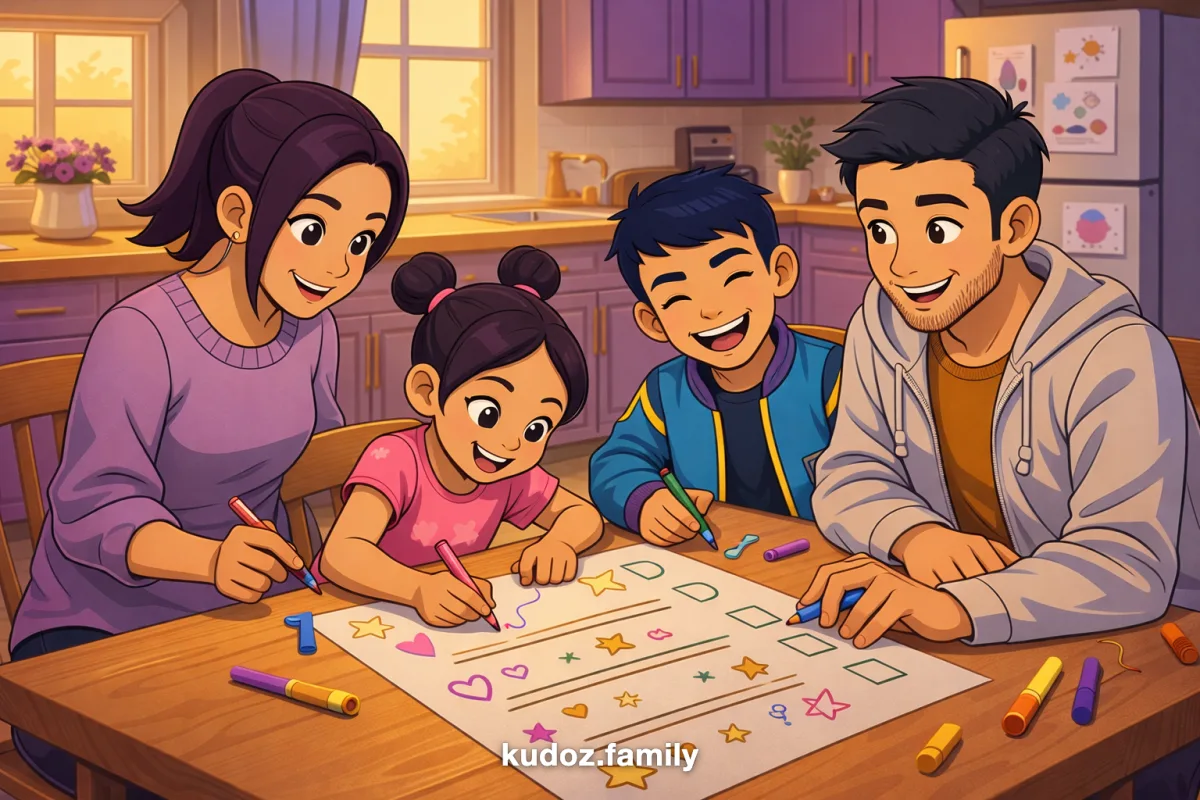
Why write your family rules down
A rule you repeat is never quite the same twice: it depends on the day, how tired you are, your mood. Written down and put up, it becomes the family's rule, not the rule of whichever parent is shouting. Kids know what to expect, and that is exactly what helps them. The CDC suggests posting a rules chart where everyone can see it, such as on the refrigerator or a door you use often.
Free printable family rules for kids
Don't keep them all. With your child, pick the rules that really matter in your home, and cross out the rest. For toddlers and preschoolers, the CDC recommends two or three rules at a time.
Free printable house rules for teens
With a teen, the conversation matters as much as the sheet. Let them suggest a rule or two, including one for the adults: they will defend it better afterwards.
How to choose your rules together
- Start with today's friction points. Meals, bedtime, screens, bedrooms: wherever the arguments happen most.
- Say what to do. Right after the rule, name the behavior you expect: "No yelling in the house" becomes "We use an inside voice".
- Be specific. "Backpack ready the night before" can be checked; "be good" can't, and the CDC warns that vague rules are hard for a child to understand.
- Keep them realistic for your child's age and abilities.
- Agree on them as a family, and ask your child to say each rule in their own words.
Making the rules stick without repeating yourself
- Point to the chart instead of repeating. "What did we agree on for phones?"
- Same rules for every adult. The CDC notes that a child's behavior is better when all caregivers support the rules in the same way: parents, grandparents, babysitters.
- Clear, consistent consequences. Agree on them ahead of time, write them next to the rule if you like, and apply them right away, the same way every time.
- Praise what goes right. Specific praise ("You put your shoes away without being asked!") as soon as you notice it. A behavior chart helps you do it every day.
- Review them every few months. A rule that has become a habit can go, and a new one can come in.
For screens in particular, see our screen time chart and the expert guidelines by age. And when a rule sets off a big meltdown, a feelings chart helps your child say what they feel instead of shouting.
Everyone's chores
"Everyone helps at home" stays vague until you say who does what. For that, see our family chore chart. In KUDOZ, each chore becomes a mission that repeats on its own; your child marks it done, you approve it, and they earn Kudoz for the rewards you chose.
Questions parents ask
How many family rules should we have?
Few. For toddlers and preschoolers, the CDC says two or three rules at a time, adding a new one once the current ones are followed. Older kids can handle more, but five to ten rules everyone knows beat twenty nobody remembers.
How do you write good family rules?
Make them specific and say what to do: "We speak kindly" rather than "No bad words", "Shoes in their place" rather than "Be tidy". The CDC advises stating the desired behavior right after the rule.
Should parents follow the family rules too?
Yes, for most of them: no phones at the table or kind words apply to everyone. The CDC also says behavior is better when all caregivers support the rules in the same way, grandparents included.
What should I do when a rule is broken?
Remind your child of the rule calmly and apply the consequence you agreed on, the same one every time. The CDC advises clear consequences, applied right away and consistently.
Sources
- CDC, Essentials for Parenting Toddlers and Preschoolers, Tips for Creating Rules (April 30, 2026).
Turn the chart into a game.
KUDOZ is a family app that does all of this for you: missions, XP, coins and a reward shop your kids actually want to open. Available on iPhone and Android.


This guide shares general parenting information. It is not medical advice and does not replace a diagnosis or a care plan from a qualified professional.