

 Français
 עברית
 Русский
Family chore chart: a free printable, and how to split chores fairly
When everyone lives in the house, everyone can help. A family chore chart makes the split visible, ends "it's always me", and gives each child chores that fit their age. Here's a free chart and a six-step method.

Why a family chore chart helps
Without a chart, chores are split out loud, and out loud gets forgotten. A chart on the wall solves three problems at once: everyone knows their job, nobody can say "you didn't tell me", and the parent doing the most finally sees it in writing.
For kids, it's also a concrete way to learn that a home runs because everyone pitches in. The American Academy of Pediatrics recommends posting a chore chart or checklist and adding one new task at a time so it doesn't overwhelm a child.
Free printable family chore chart
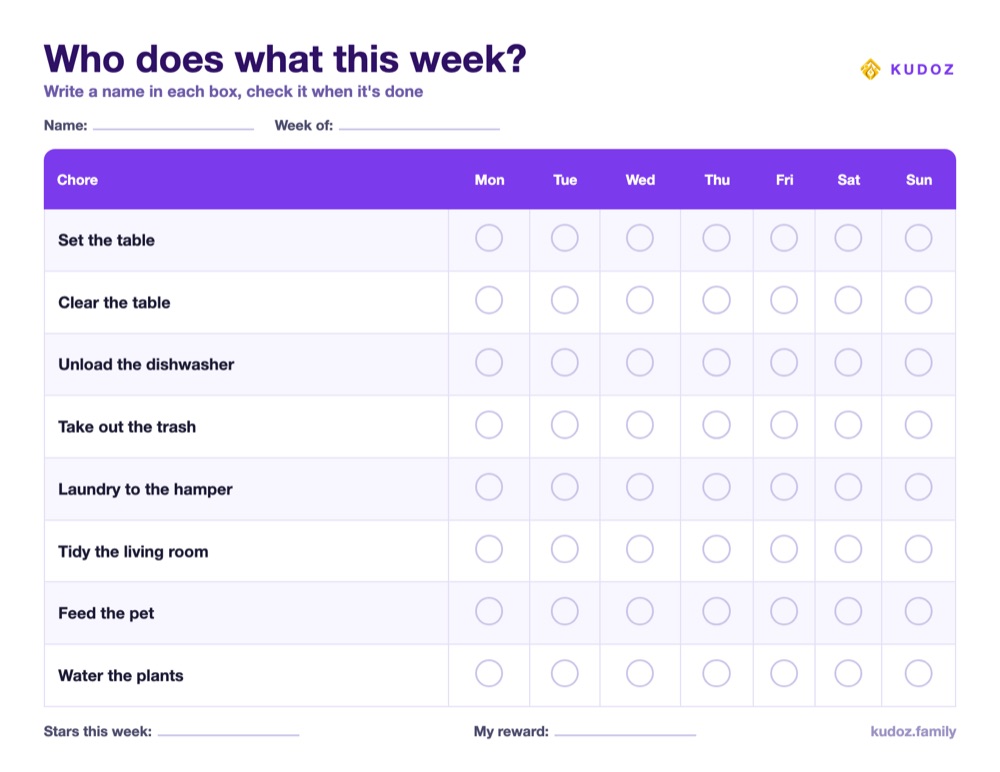
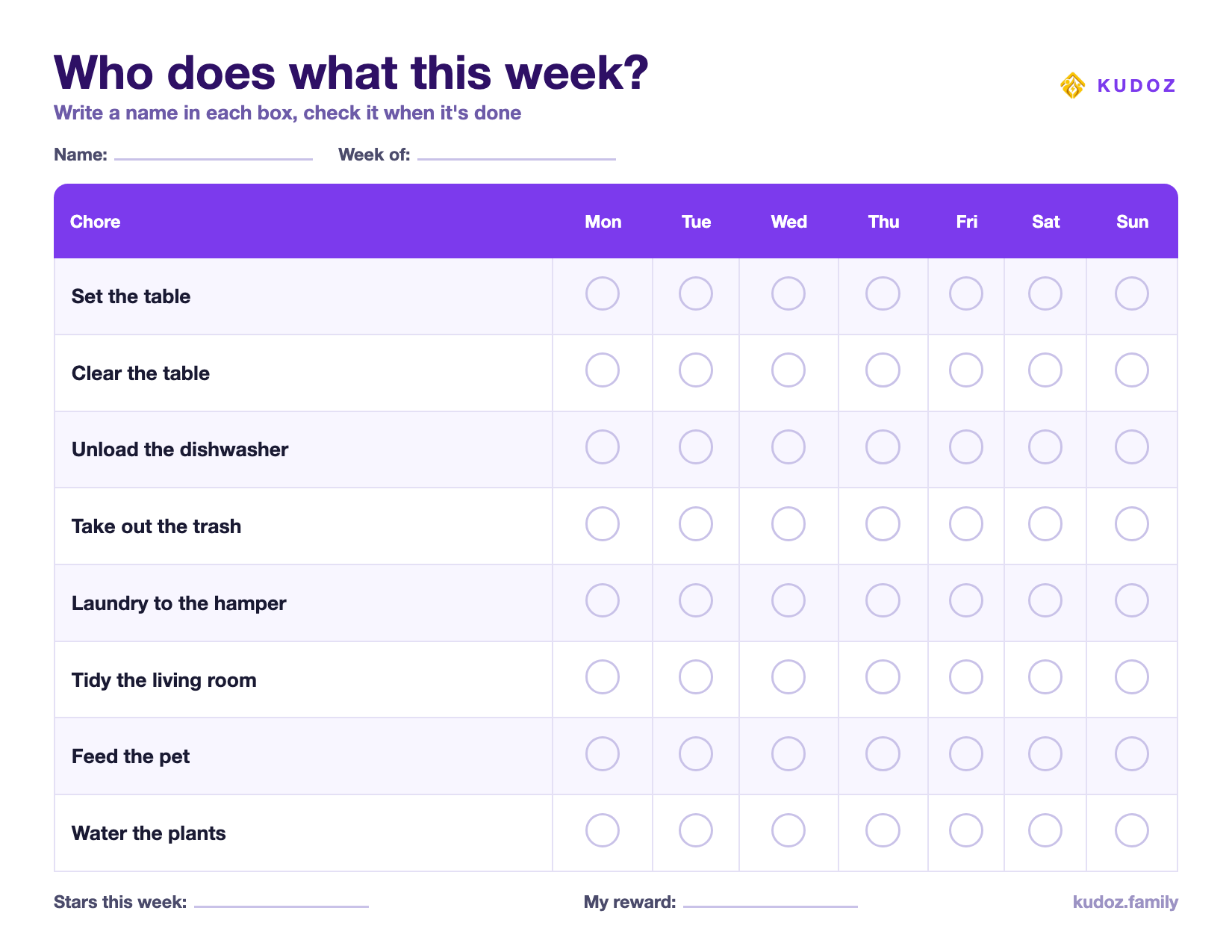
Write the name of whoever takes each chore that day, then check it off. Cross out the chores that don't apply, and add your own in the blank rows of our blank chore chart.
How to split chores in 6 steps
- List every chore for a week, even small ones: groceries, laundry, meals, trash, the pet.
- Estimate the time for each. Unloading the dishwasher takes 5 minutes; cooking dinner takes 45.
- Share by age: each child gets chores they can do alone (see the table below).
- Rotate the unpopular jobs every week: trash, litter box, bathroom.
- Post the chart in the same place, where everyone sees it.
- Hold a 10-minute family check-in every week: what works, what doesn't, who swaps with whom.
Which chores at which age
| Age | Chores on the family chart |
|---|---|
| 3 to 5 | Toys away, laundry to the hamper, napkins on the table, help feed the pet |
| 6 to 8 | Set and clear the table, make the bed, sort laundry, water the plants |
| 9 to 11 | Unload the dishwasher, vacuum, take out the trash, make a snack |
| 12 and up | Run a load of laundry, clean the kitchen or bathroom, cook a simple meal, part of the groceries |
For the full list by year, see chores by age.
Fair doesn't mean identical
- Same effort, not same chores. Older kids do more, and both know why.
- Count the schedule. On sports days, the chore is shorter.
- Parents are on the chart too. Kids accept their share better when they see the adults' share, the same way family rules work better when adults follow them too.
- No comparing kids. Each child is measured against their own chores.
Weekly or daily?
Daily chores (table, beds, pet) suit a daily grid like the one above. Bigger jobs (vacuuming, the bathroom, the car) fit better on a weekly plan: see our weekly chore chart, with a daily, weekly and monthly list. As kids grow, move them from "who does what today" to a responsibility chart: jobs that are theirs every day.
Paper or app?
Paper is a fine start. With several kids and chores that repeat every day, an app saves redrawing the chart. In KUDOZ, each chore becomes a mission that repeats on its own (every day, weekdays or chosen days), a mission can go to several kids at once, and each child earns points for rewards you pick.
Questions parents ask
How do you split chores fairly in a family?
List every chore, estimate how long each takes, then share them by age and schedule. Fair doesn't mean identical: a 12-year-old does more than a 5-year-old, and parents are on the chart too.
Should chores rotate?
Rotate the jobs nobody wants (trash, the litter box, the bathroom) every week. Keep the others stable so each person masters their own.
What chores can kids do in a family chore chart?
From 3: toys and laundry to the hamper. From 6: setting and clearing the table, making the bed. From 9: dishwasher, trash, vacuuming. From 12: cooking a simple meal, cleaning the bathroom.
Sources
- American Academy of Pediatrics, HealthyChildren.org, Age-Appropriate Chores for Children (updated February 9, 2024).
Turn the chart into a game.
KUDOZ is a family app that does all of this for you: missions, XP, coins and a reward shop your kids actually want to open. Available on iPhone and Android.


This guide shares general parenting information. It is not medical advice and does not replace a diagnosis or a care plan from a qualified professional.