

 Français
 עברית
 Русский
Weekly chore chart: free printables, and a daily, weekly and monthly chore list
A weekly chore chart answers one question every morning: what do I do today? Pair it with a list of what happens daily, weekly and monthly, and the whole house stops depending on one person's memory. Here are the templates and the list.

How a weekly chore chart works
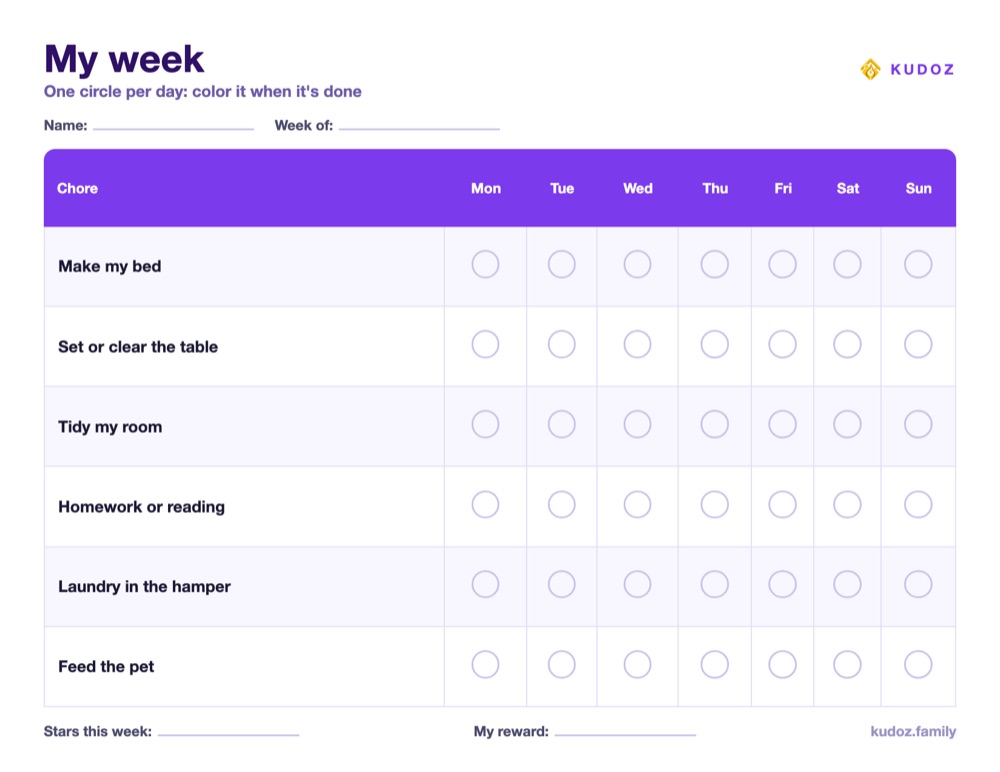
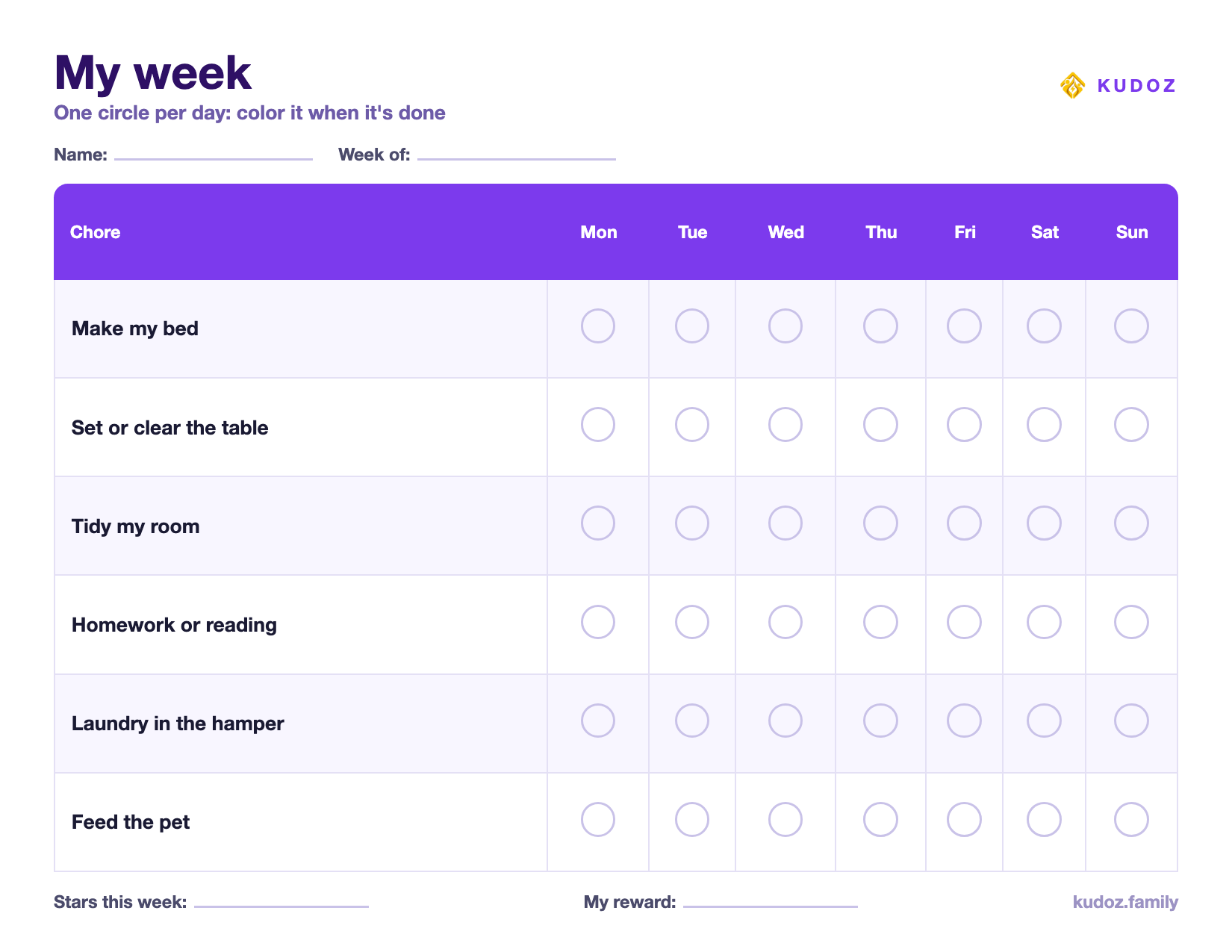
Rows are chores, columns are days. Each time a chore is done, your child colors the circle for that day. At the end of the week you look at the chart together, and a new one starts on the same day every week, often Sunday evening.
The weekly rhythm is what makes it last: a fresh chart every week feels like a new start, and a reward at the end of the week gives a short, reachable goal.
Free printable weekly chore charts
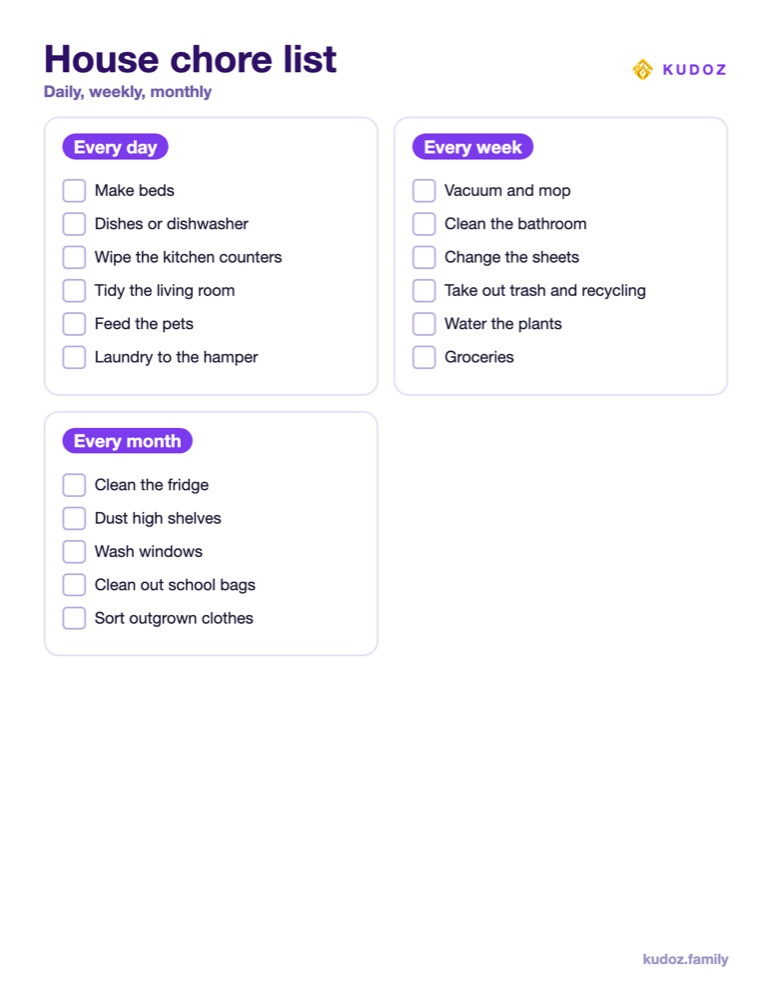
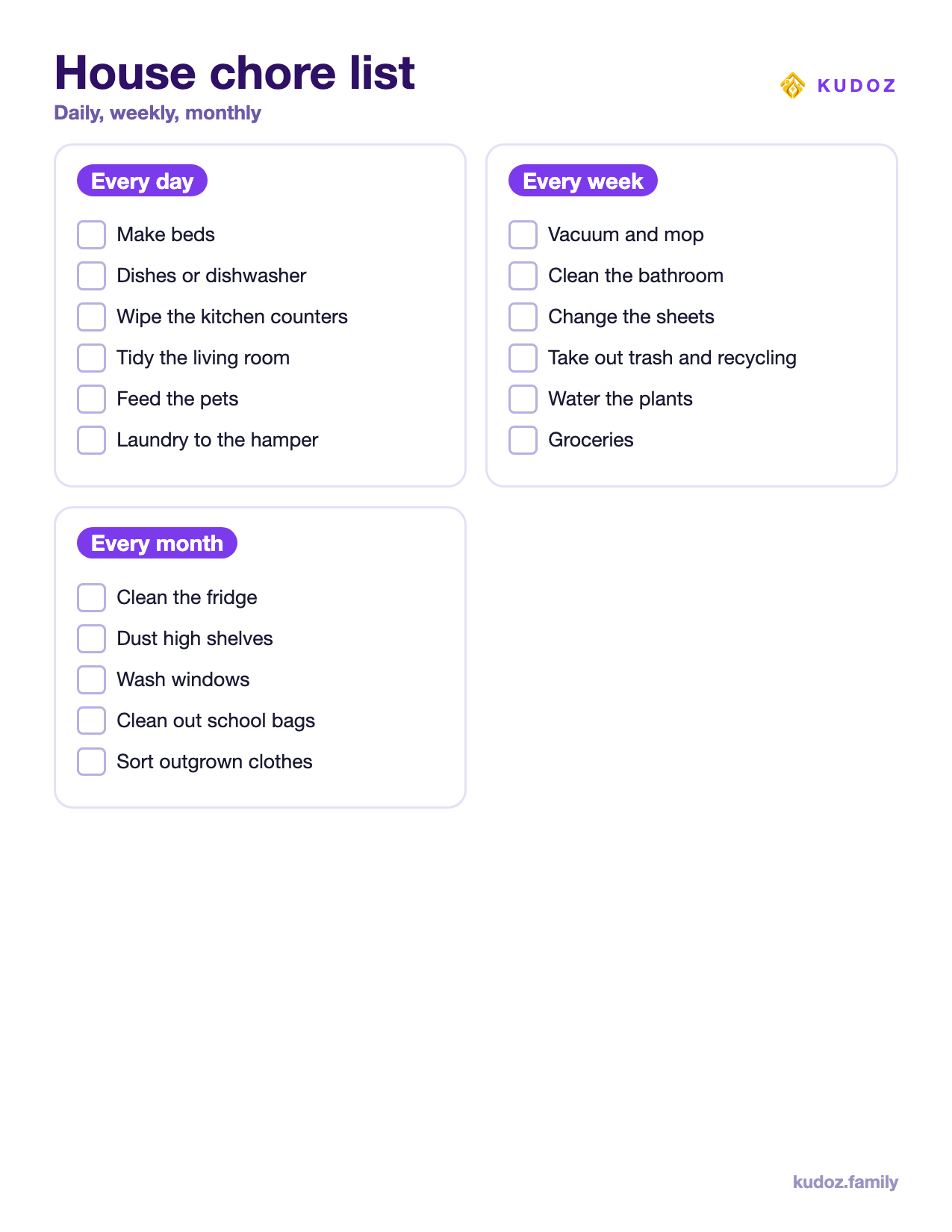
Two templates: a weekly chart for kids, and a house chore list split into daily, weekly and monthly jobs.
Daily, weekly, monthly: who does what
| Rhythm | Chores | Kids can help from |
|---|---|---|
| Every day | Beds, dishes, counters, tidying, pets, laundry to the hamper | 3 (toys, laundry), 6 (beds, table) |
| Every week | Vacuuming, bathroom, sheets, trash and recycling, plants, groceries | 8 (vacuuming), 9 (trash), 11 (bathroom) |
| Every month | Fridge, high shelves, windows, school bags, outgrown clothes | 7 (school bag), 10 (fridge with help) |
These ages are rough markers. Where the American Academy of Pediatrics lists a chore (vacuuming from 8, cleaning the bathroom from 11), we follow it; the others are common practice. Our chores by age guide goes year by year.
Setting up the week in 5 steps
- Pick a reset day, the same every week. Sunday evening works for many families.
- Fill in the chart together. Kids follow a chart they helped write.
- Keep daily chores few: two to six per child. Put bigger jobs on one day each.
- Agree on the end-of-week reward and write it at the bottom.
- Review in two minutes at the reset: what went well, what to swap.
Weekly chore chart for several kids
Use one chart per child, or a family chore chart with a name in each box. Rotate the chores nobody wants every week, and compare each child only to their own chart.
For teens and adults
Teens can run their own weekly plan: their laundry, one zone of the house, one family meal. See our chore chart for teens. The daily, weekly and monthly list above works for adults too, as a shared household plan.
Paper or app?
A printed weekly chart is a great start, but it needs redrawing every week. A reusable chore board (whiteboard or magnetic) avoids that. An app repeats chores on its own: in KUDOZ, a mission can come back every day, on weekdays, on chosen days, weekly or monthly, and kids see their progress like a game. Compare both in our chore chart app guide.
Questions parents ask
What should be on a weekly chore chart?
Two to six daily chores per child, written as clear actions, with a box for each day. Bigger weekly jobs go in a separate row or on the weekly list.
Daily or weekly chore chart?
Both: daily chores on the weekly grid, and bigger jobs (vacuuming, bathroom, sheets) once a week on the list. Monthly jobs go on the same list.
How do I keep a weekly chore chart going?
Reset it on the same day every week, swap one chore that became automatic for a new one, and keep the reward at the end of the week.
Sources
- American Academy of Pediatrics, HealthyChildren.org, Age-Appropriate Chores for Children (updated February 9, 2024).
Turn the chart into a game.
KUDOZ is a family app that does all of this for you: missions, XP, coins and a reward shop your kids actually want to open. Available on iPhone and Android.


This guide shares general parenting information. It is not medical advice and does not replace a diagnosis or a care plan from a qualified professional.