

 Français
 עברית
 Русский
Chore board ideas: whiteboard, magnetic and DIY boards that kids actually use
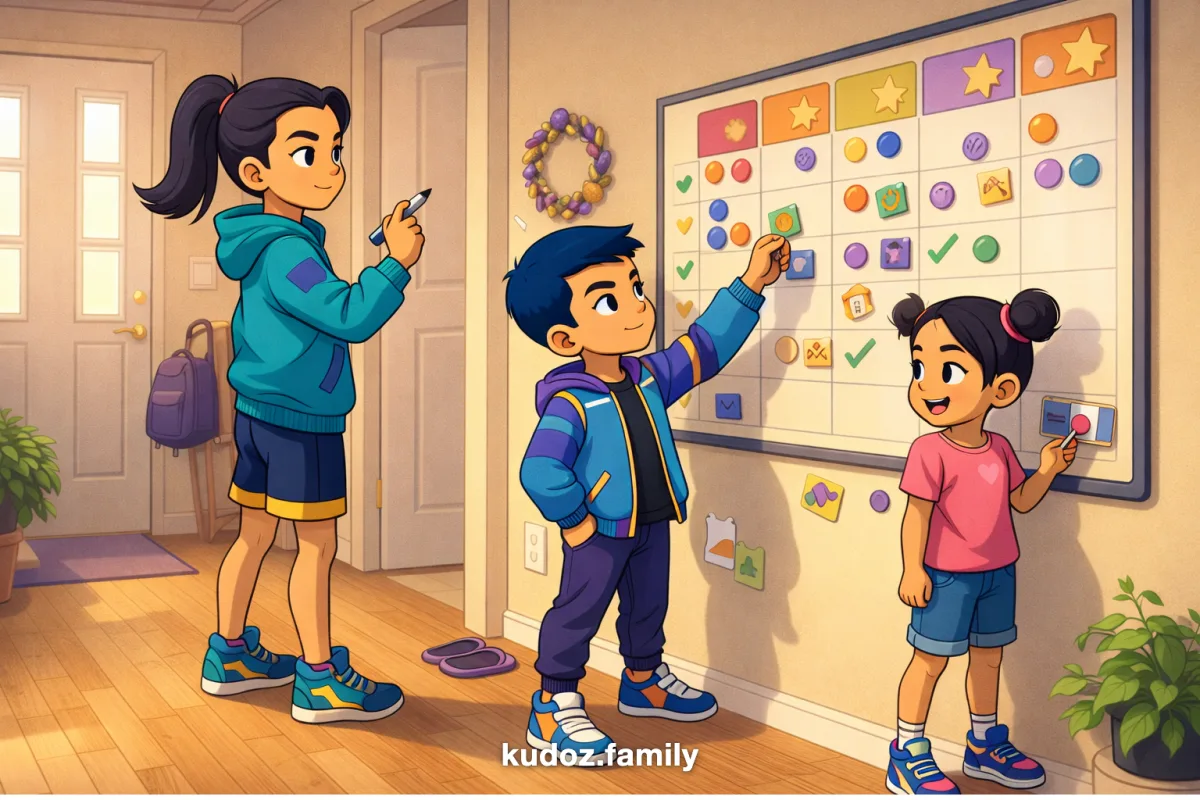
A chore board is a chore chart you don't have to reprint: a whiteboard, a magnetic board or a homemade board where chores move from "to do" to "done". Here are the main types, how to set one up, and what makes kids keep using it.
Chore board or chore chart?
A paper chart is quick to start, but it fills up and has to be reprinted. A board is reusable: you set it up once, and every day or week you reset it. Boards also suit families where chores change often, or with several kids who each need a column.
If you'd rather start with paper, our free printable chore charts and weekly chore chart are ready to print.
Types of chore boards
| Type | Best for | How it works |
|---|---|---|
| Dry-erase whiteboard | Changing chores, older kids | Draw a grid with tape, write chores, check them with a marker, wipe at the reset |
| Magnetic board | Ages 3 to 7 | One magnet per chore, with a picture; move it from "to do" to "done" |
| Clothespin board | DIY, several kids | Chores written on clothespins, clipped on each child's strip, moved to a "done" jar |
| Pocket board | Rotation of chores | Cards in pockets, one per child; swap cards every week |
| Cork board | Teens | A weekly list pinned up, crossed out as they go |
How to set up a chore board in 5 steps
- One column per child, with their name or photo. Add a column for parents too.
- Two to five daily chores per child, chosen for their age. See chores by age.
- Pictures for kids who can't read yet: a toothbrush, a shirt, a plate.
- A clear "done" area: a column, a jar, or a check mark. Kids love moving something to "done".
- A reset time: every evening for daily boards, Sunday for weekly ones.
DIY chore board ideas
- Fridge grid: thin washi tape on the fridge door turns it into a whiteboard grid.
- Picture magnets: print small pictures, glue them on magnetic sheets, cut them out.
- Clothespins and a ribbon: one ribbon per child, chores written on pins.
- A frame as a whiteboard: any glass photo frame works with dry-erase markers. Slide a printed chart inside.
- Jar of jobs: extra chores on sticks; kids pick one when they want to earn something extra.
Making the board last
- Keep it where life happens, at child height.
- Check it at the same time, for example before dinner.
- Link it to something: a family activity at the end of the week, points toward a reward. Our reward chart guide has ideas.
- Refresh the chores every few weeks so it doesn't become wallpaper.
- Several kids? Rotate the chores nobody wants, and see our family chore chart for a fair split.
Board, paper or app?
A board is great for young kids who love moving magnets, and for families who like chores visible in one place. Once kids are 7 or 8, an app can take over the counting: in KUDOZ each chore is a mission on your child's own screen, it repeats on its own, and you approve with a tap. Compare the options in our chore chart app guide.
Questions parents ask
What is a chore board?
A reusable board (whiteboard, magnetic or homemade) where each child's chores are listed and marked done during the day, then reset for the next day or week.
Whiteboard or magnetic chore board?
A dry-erase whiteboard is the most flexible and the cheapest. A magnetic board with chore magnets is faster for young kids: they move a magnet instead of writing.
Where should a chore board go?
Where the family passes every day and at kids' eye level: the kitchen, the hallway by the door, or the fridge.
Turn the chart into a game.
KUDOZ is a family app that does all of this for you: missions, XP, coins and a reward shop your kids actually want to open. Available on iPhone and Android.


This guide shares general parenting information. It is not medical advice and does not replace a diagnosis or a care plan from a qualified professional.